

Zero-knowledge proofs are leading the way in protecting privacy and security in digital systems. Layer-1 blockchains, Ethereum ZK-rollups, and institutional DeFi platforms now rely on ZKPs to make transactions both scalable and private.
- What Does Zero-Knowledge Proofs Mean?
- How Do Zero-Knowledge Proofs Work?
- What Are the Types of Zero-Knowledge Proofs?
- Why Are Zero-Knowledge Proofs Important?
- What Are the Applications of Zero-Knowledge Proofs?
- What Are the Benefits and Challenges of Zero-Knowledge Proofs?
- How Zero-Knowledge Proofs Are Driving Scalable and Private Blockchain Operations?
- Conclusion
- Glossary
- Frequently Asked Questions About Zero-Knowledge Proofs
Shielded pools and smart contracts that keep data confidential are becoming standard tools in digital finance. Investments of more than $100 million in verifiable computing highlight the growing importance of ZKPs for finance, digital identity, and regulatory compliance.
What Does Zero-Knowledge Proofs Mean?
Zero-knowledge proofs are advanced cryptographic methods that allow a prover to convincingly demonstrate that a statement is true without ever revealing any of the underlying data or sensitive details. In simple terms, ZKPs provide a way to verify information or claims while keeping the actual information completely private and secure.
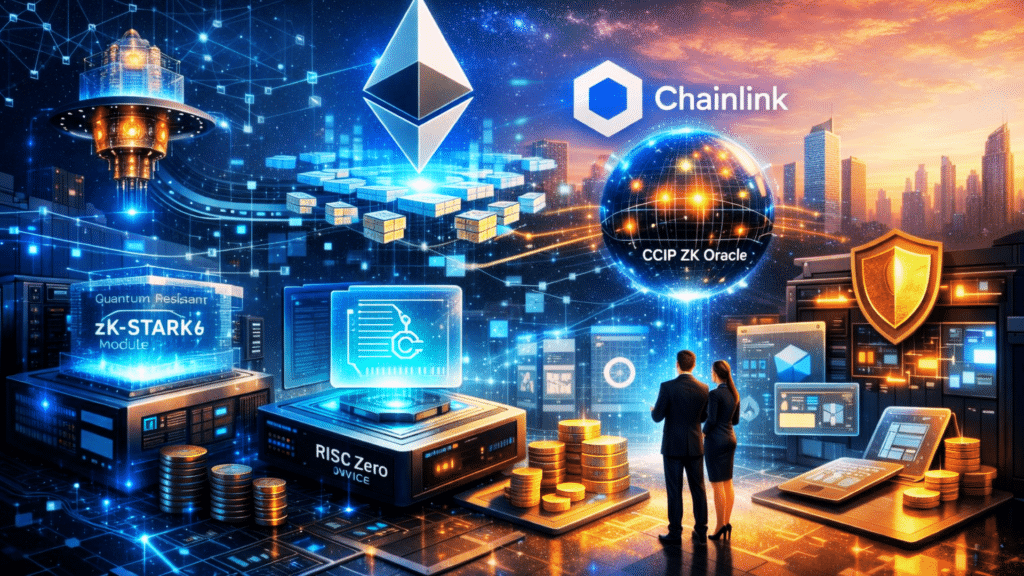
This method represents a significant evolution in how trust, security, and privacy are maintained in digital systems, enabling organizations and individuals to interact confidently without exposing sensitive information. Today, zero-knowledge proofs are widely implemented across decentralized finance platforms, privacy-focused layer-1 blockchains, and Ethereum ZK-rollups, where they help ensure that transactions and computations remain both verifiable and confidential.
How Do Zero-Knowledge Proofs Work?
ZKPs rely on advanced cryptographic algorithms and allow a prover to show that a statement is true without revealing any secret information. A well-known example is the graph isomorphism problem where the prover convinces a verifier that two graphs are structurally identical without sharing the exact mapping.
Another classic scenario is the cave example in which the prover demonstrates knowledge of a secret path without revealing it. These examples illustrate the main idea of ZKPs, which is proving knowledge without disclosing sensitive data.
In practical applications, zero-knowledge proofs use cryptographic circuits where the prover submits inputs that satisfy certain constraints and produces outputs the verifier can check without seeing the private data. Modern implementations also include recursive proofs and PLONK-style systems that allow thousands of transactions to be verified efficiently in Ethereum ZK-rollups and privacy-focused layer-1 blockchains.
What Are the Types of Zero-Knowledge Proofs?
Interactive ZKPs involve several rounds of communication where the prover answers challenges from the verifier, gradually proving the claim without revealing any secrets. Non-interactive zero-knowledge proofs or NIZKs remove the need for back-and-forth interaction by using cryptographic transformations or a common reference string to create a single proof that anyone can verify.
Some of the most widely used systems today are zk-SNARKs, especially PLONK-style recursive proofs, which produce compact and fast-verifying proofs suitable for blockchain scalability. Recursive proofs can even verify other proofs, making it possible to validate entire blocks or smart contract computations efficiently.
Earlier systems such as Groth16, Pinocchio, and Sonic were important in developing the technology but have mostly been replaced by these modern approaches. zk-STARKs, which provide quantum-resistant security and transparency without a trusted setup, are also being adopted for large-scale, privacy-focused computations.
Why Are Zero-Knowledge Proofs Important?
Zero-knowledge proofs change the way verification works by letting users prove something’s true without revealing any sensitive information. Public blockchain networks stay transparent, but that openness can put private data at risk. ZKPs allow users to show transactions are correct without giving away amounts, participants, or other confidential details.
This matters a lot for institutional DeFi platforms and privacy-focused layer-1 blockchains. Shielded pools, private smart contracts, and verifiable off-chain computations now show up often. Experts say ZKPs let networks keep trust strong while guarding privacy, which apps need to handle compliance standards.
What Are the Applications of Zero-Knowledge Proofs?
ZKPs are used in many industries. In blockchain and cryptocurrencies, they let transactions remain private on otherwise transparent networks. Shielded pools hide the sender, recipient, and transaction amounts while still allowing verification.
Ethereum ZK-rollups and privacy-focused layer-1 blockchains use recursive proofs to check large numbers of transactions quickly and efficiently. In digital identity and compliance, zero-knowledge proofs let people verify details such as age, citizenship, or qualifications without sharing more information than necessary.
Decentralized identity systems and ZK-based compliance tools reduce the risk of fraud while keeping sensitive data secure. ZKPs are also used for confidential computation and secure oracle services. Zero-Knowledge Virtual Machines like RISC Zero allow private calculations to be done on-chain.
Chainlink CCIP ZK oracles help DeFi platforms pull in data from outside the blockchain without exposing it. Banks, hospitals, and government offices turn to ZKPs to confirm sensitive information stays accurate yet private. That setup safeguards patient files, loan records, and even voting results.
What Are the Benefits and Challenges of Zero-Knowledge Proofs?
The use of ZKPs brings many important benefits. They protect privacy by allowing verification without sharing sensitive data and improve security by reducing the risk of hacks or unauthorized access. ZKPs also help meet regulatory requirements by proving correctness without revealing confidential information and lower blockchain computational and storage costs through more efficient verification.
They make it easier for different platforms to work together. Zero-knowledge proofs also help stop fraud in financial and identity systems. At the same time, it faces real challenges.
Creating proofs takes a lot of computing power. The cryptography involved gets quite complex, which makes implementation tricky. Teams adding ZKPs to existing systems need strong technical skills. Plus, without universal standards, getting them to work smoothly across platforms stays tough right now.
How Zero-Knowledge Proofs Are Driving Scalable and Private Blockchain Operations?
Recursive proofs and zk-SNARK upgrades allow high-scale transaction validation across blockchain networks. Zero-Knowledge Virtual Machines like RISC Zero make it possible to run confidential smart contract computations, while quantum-resistant zk-STARKs provide stronger long-term security.
Ethereum ZK verifier improvements increase throughput and reduce gas costs, and Chainlink CCIP ZK oracles enable private and compliant decentralized finance operations. Institutional DeFi platforms and privacy-focused layer-1 projects are investing more than $100 million in verifiable compute infrastructure, making ZKPs a key tool for scaling privacy and compliance.
These technologies are also helping institutional DeFi operate with on-chain confidentiality and privacy-preserving smart contracts.
Conclusion
Zero-knowledge proofs are changing the way blockchain and digital systems handle privacy and security, offering a reliable method to verify transactions and data without revealing sensitive information. By allowing verification without disclosure, they balance correctness, trust, and confidentiality while supporting scalable operations on networks like Ethereum ZK-rollups and privacy-focused layer-1 blockchains.
From shielded pools to ZKVM-based confidential computation and institutional DeFi, ZKPs are becoming essential tools for secure, privacy-preserving blockchain applications. As adoption grows across finance, identity, and decentralized platforms, ZKPs are increasingly recognized as a foundational technology, enabling transparency and privacy to coexist while maintaining compliance and security.
Glossary
Zero-Knowledge Proofs (ZKPs): A method to prove something is true without showing private details.
Prover: The person or system that creates the proof.
ZK-Rollups: Blockchain technology that processes transactions together using ZKPs.
Shielded Pools: Tools that keep transaction details private but still valid.
Recursive Proofs: Proofs that can verify other proofs to improve blockchain speed.
Frequently Asked Questions About Zero-Knowledge Proofs
Why are zero-knowledge proofs important?
Zero-knowledge proofs are important as they protect privacy while keeping systems secure.
Can ZKPs help with digital identity?
Yes, zero-knowledge proofs help people prove identity details without sharing full data.
How do zero-knowledge proofs help blockchain users?
ZKPs help users make transactions without showing personal or financial details.
Are zero-knowledge proofs used in DeFi?
Yes, ZKPs are widely used in DeFi to keep trades and balances private.
Do ZKPs reduce blockchain costs?
Yes, zero-knowledge proofs can reduce costs by making verification more efficient.