

This article was first published on Deythere.
- Western Union and What it’s Working On: USDPT, Stablecoin Card, and Digital Asset Network
- Inflation, Remittances and Use-Cases in the Real World
- How It Works – From USDPT to Daily Spending
- Conclusion
- Glossary
- Frequently Asked Questions About Western Union Stablecoin Card
- What is Western Union’s USDPT stablecoin?
- How does the Western Union stablecoin card function?
- Why is Western Union doing this now?
- Where will USDPT and the stablecard operate?
- When will the stablecoin go live?
- References
The Western Union (WU) has revealed a revolutionary program to address one of the most painful issues for individuals receiving money in an inflation-burdened economy which is the depreciation of value between sending and spending.
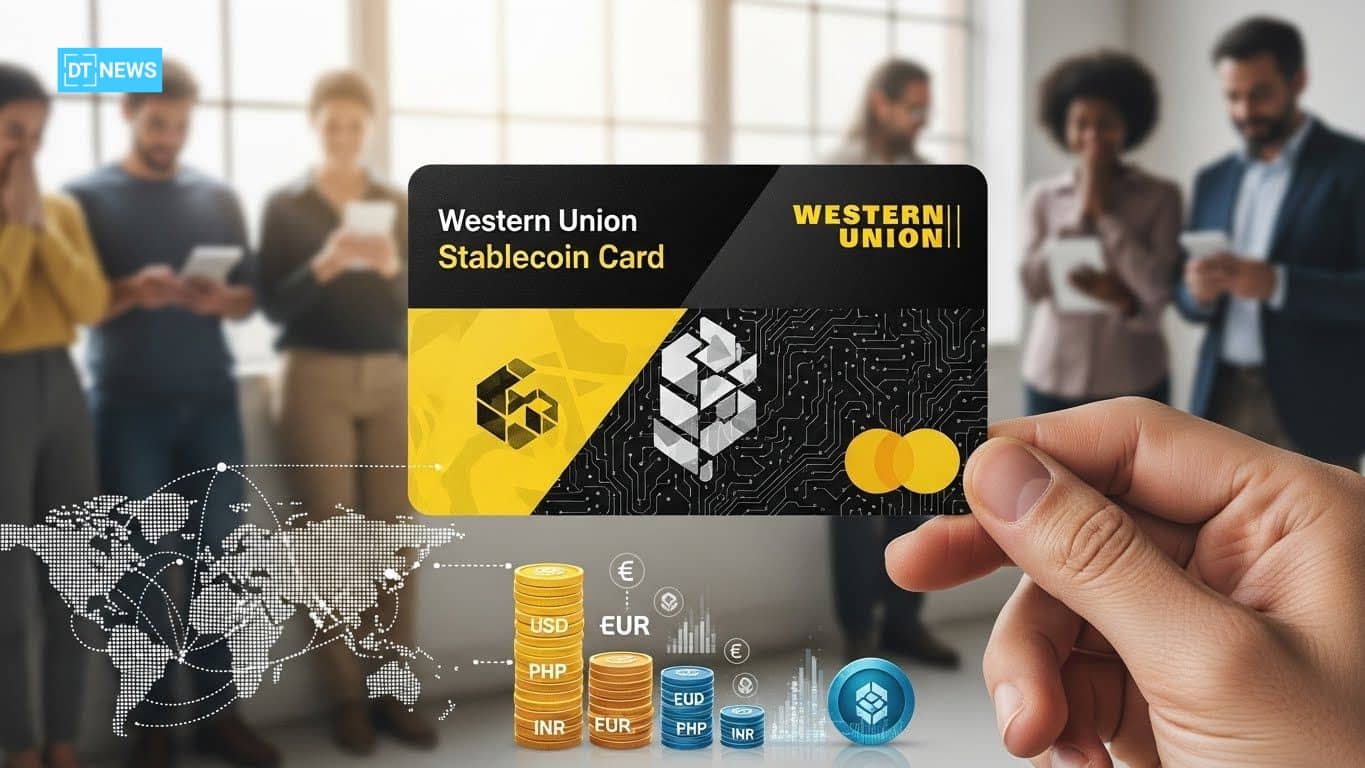
WU plans to offer a prepaid card, supported by an upcoming USD-pegged stablecoin, to store the value of remittances transmitted outside users’ home countries.
The stablecoin called USDPT will operate over Solana and connect to a “Digital Asset Network” (DAN), attempting to integrate crypto-rails and traditional remittance infrastructure.
Western Union and What it’s Working On: USDPT, Stablecoin Card, and Digital Asset Network
The 2025 announcement from Western Union outlines a multi-pillar strategy. The company will issue USDPT in partnership with Anchorage Digital Bank, its regulated U.S. custodian with full fiat reserves backing the stablecoin.
USDPT will be used on the Solana blockchain, which is renowned for its high speed and low fees. WU plans to launch USDPT in the first six months of 2026.
In addition to USDPT, Western Union is also working on a “stablecoin-backed prepaid card” (commonly termed a “stable card”) for nationals whose local currencies crash or quickly depreciate.

The card is intended to allow recipients to keep remittance funds in a stable currency, rather than immediately converting all of it and risking the possibility its value will fall.
The wider infrastructure is made up of “Digital Asset Network” (DAN) and on-and-off ramps that connect to partner wallets, payment providers and cash-out points. The idea is to offer users flexibility. They can spend at merchants, withdraw cash from local agents or hold their USDPT until they feel market conditions are suitable.
Inflation, Remittances and Use-Cases in the Real World
Remittance value can quickly depreciate for those who live in countries with high inflation or unstable currencies, between the time the money is sent and when it is spent locally.
Western Union makes the point most starkly: A $500 remittance from abroad meant to support a family there might lose considerable purchasing power over only a few weeks, should it be converted into an in-rapid-decline local currency.
This means that the card, backed by a stablecoin, provides a hedge. Users can keep their funds in the form of dollar-pegged tokens until you use them (through the card or as cash via an ATM); either way, there is no exposure to local currency.
Emerging-market economies with high dependence on remittances, particularly in Latin America, Africa, and parts of Asia, are poised to gain the most. For instance, Western Union has recognized the African remittance corridors with limited banking infrastructure and local currency volatility as a significant opportunity.
Additionally, USD-stable coins and blockchain settlement offer significantly lower transaction times and costs than traditional cross-border fund transfers, which usually involve intermediaries and lengthy delays.
Using Solana as its technical backbone, Western Union’s vision is for near-instant, low-cost transfers, a potentially groundbreaking move away from conventional money-transfer solutions.
How It Works – From USDPT to Daily Spending
The target user flow for Western Union’s new stablecoin ecosystem couldn’t be any simpler:
A sender overseas or in another country (in dollars or local currency) wants to send a transfer to a recipient in high-inflation places.
Instead of settling directly in local currency, the funds settle as USDPT stablecoins.
The recipient draws the stablecoins or loads them onto a WU-issued prepaid Visa card (or a wallet partner).
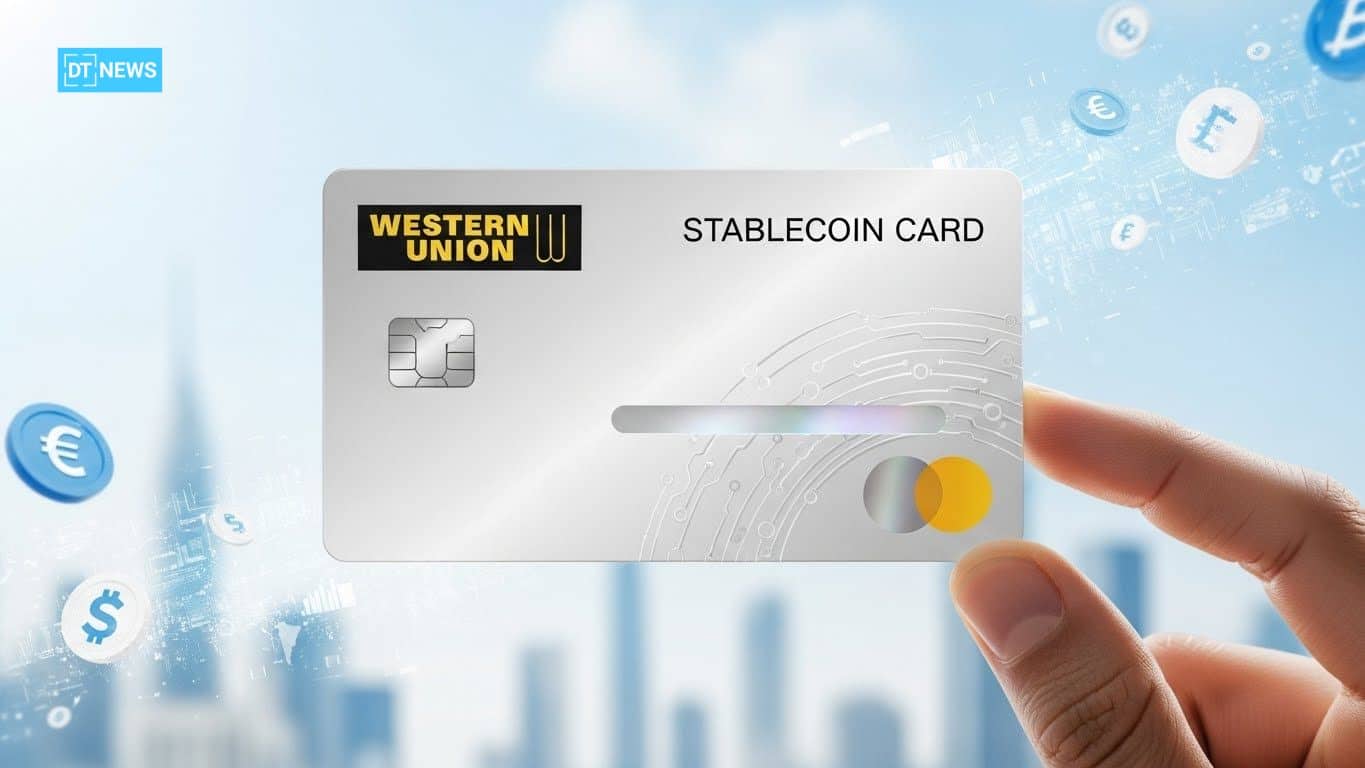
Recipients can spend with merchants that accept Visa, or cash out via local Western Union agents (on-ramp/off-ramp network).
Alternatively, recipients can store USDPT as digital savings and preserve value in the face of local currency inflation, utilizing the asset when it’s required.
Global reach by Western Union serves over 200 countries and partnering with wallet providers help ensure broad access.
Effectively linking stablecoins on blockchain to global cash and card infrastructure, the network provides a hybrid solution that brings together the benefits of cryptocurrency (stability, low cost, global reach) with digital money’s usability (merchants, cash withdrawal points, local currency conversion).
Conclusion
Western Union’s push with USDPT and stablecoin cards could really drive “digital-dollarization,” in which stablecoins, not local currencies, are used as the default unit for savings and remittances and day-to-day commerce in fragile economies.
Analysts believe demand for regulated stablecoins will be particularly strong in areas where there is high inflation, currency controls or an unstable banking system.
Supporting its USD-pegged stablecoin USDPT on Solana and an upcoming stablecoin-linked prepaid card, Western Union is making a statement in the future of global remittance. The program will protect convertees and recipients from inflation, reduce cost and completion time for transactions and integrate blockchain innovation with conventional payout infrastructure.
Glossary
USDPT – The U.S. Dollar Payment Token, a stablecoin pegged to USD such as the one from Western Union, built on Solana and set for launch in 2026.
Stable coin-backed card (“Stable card”) – A prepaid payment card where the balance is stored in a USD pegged stable coin instead of local, allowing stability and the ability to use it globally.
Digital Asset Network (DAN) – Western Union’s robust settlement + on/off-ramp infrastructure coupling stablecoin wallets, exchanges and physical cash-out points across the entire globe.
On-ramp/off-ramp: Services that facilitate the exchange from fiat (local currency) to stablecoins (digital assets), and deposits and withdrawals.
Dollarization / Digital-dollarization – The depreciation of the local currency has led to transfers of savings, remittances, or everyday transactions towards stable coins or USD-pegged assets in order to sustain value.
Frequently Asked Questions About Western Union Stablecoin Card
What is Western Union’s USDPT stablecoin?
USDPT is a U.S. dollar-backed stablecoin offered by Western Union in collaboration with Anchorage Digital Bank. It operates on the Solana blockchain and it will be released during the first half of 2026.
How does the Western Union stablecoin card function?
USDPT is the stablecoin in which recipients will receive remittances. They can spend with a prepaid Visa debit-style card, or cash out at local Western Union branches, insulating their money from the inflation of local currency.
Why is Western Union doing this now?
With high inflation and devaluation of currencies in many emerging markets, the value of remittances is falling for receivers. Western Union views its stablecoin infrastructure as a means to help store and transfer value more efficiently and modernize the process of sending money worldwide.
Where will USDPT and the stablecard operate?
Western Union is available in more than 200 countries. It aims to leverage its international network spanning agents, local payout partners, wallet service providers and off-ramp providers to facilitate USDPT distribution and cash-out or card spending.
When will the stablecoin go live?
USDPT is projected for availability in the first half of 2026. The launch for the stablecoin card will programatically expand to high-inflation regions shortly afterwards.
References
Western Union Investor Relations
Cointelegraph
Investing
Cryptonews
Blockzeit
Cryptorank