
Crypto wallet security has become a defining concern in 2026 as digital asset ownership expands and threat actors refine their methods. The latest guidance from primary industry practices shows a clear shift toward layered protection rather than single point defenses. Attack methods now include phishing campaigns, malware clipboard hijacking, fake support outreach and social engineering.
- How does crypto wallet security define safe usage in 2026?
- How have modern threats changed the security approach?
- Why is strong authentication now essential?
- Which wallet setup works best for different users?
- How should users balance security and convenience?
- Why is seed phrase protection critical?
- What role does hardware wallet design play in safety?
- How can users prevent transaction and smart contract risks?
- Why are alerts whitelists and recovery planning important?
- Conclusion
- Glossary
- Frequently Asked Questions About Crypto Wallet Security 2026
As adoption grows across users and institutions the margin for error continues to shrink. The focus has moved beyond convenience toward structured protection where private keys recovery credentials and transaction habits are treated as critical assets.
How does crypto wallet security define safe usage in 2026?
Crypto wallet security refers to protecting the private keys that control access to blockchain assets. Wallets do not store coins in a physical sense. They provide access to ownership recorded on decentralized networks.
If private keys are exposed funds can be transferred without permission. There is no central authority to reverse such transactions. This makes prevention essential rather than optional.
Securing a wallet means protecting both access and recovery. It includes safeguarding login credentials, securing seed phrases and maintaining a clean device environment. In 2026 wallets are treated more like secure vaults than simple apps.
How have modern threats changed the security approach?
The threat landscape has evolved rapidly. Early risks focused on weak passwords. Today attackers rely on more advanced and targeted methods. Phishing sites now closely mimic legitimate platforms. Fake airdrops encourage users to connect wallets and approve harmful transactions. Clipboard hijackers replace wallet addresses during transfers without detection.
Fake wallet apps and malicious browser extensions have also become a major risk. These tools often appear legitimate but are designed to capture sensitive data or redirect transactions. Users who install unverified extensions expose their wallets to hidden threats.
Social engineering continues to expand. Attackers impersonate support teams, recovery agents or known contacts. These tactics aim to create urgency and gain access to private information. Crypto wallet security now hinges on a blend of user awareness and robust technical safeguards. Every interaction demands careful verification before proceeding.
Why is strong authentication now essential?
Two factor authentication has become a baseline requirement across wallets exchanges and connected email accounts. Passwords alone are no longer sufficient. Authenticator apps and hardware security keys offer stronger protection than SMS based codes. SMS can be intercepted which makes it less reliable.
Passkeys and biometrics are gaining traction, bolstering wallet/exchange security by ditching passwords. Paired with hardware keys, they erect a tougher shield against intruders. Backup codes must be stored offline. Email accounts linked to wallets should have equal or stronger protection. Crypto wallet security improves when every access point follows the same standard.
Which wallet setup works best for different users?
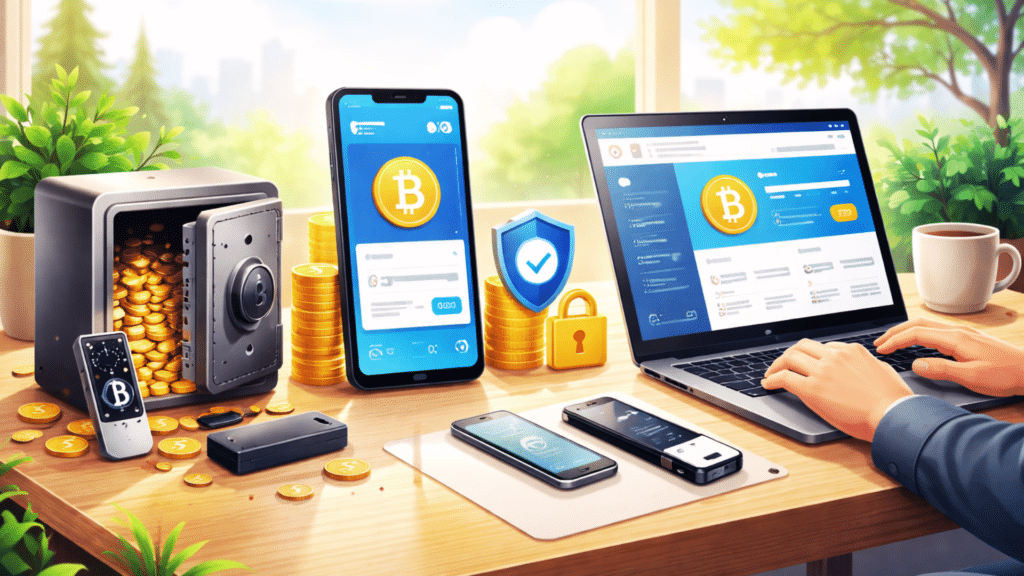
Choosing the right setup depends on how the wallet is used. Not every user needs the same structure. Hot wallets are useful for daily activity. They allow quick transfers and interaction with applications. Keeping only small balances in them reduces risk. Cold wallets suit long-term storage, keeping keys offline and safe from hacks.
Multisignature wallets are suited for larger portfolios or shared access. They require more than one approval before funds can move which reduces single point failure risk. Watch only wallets allow monitoring without exposing private keys. This adds visibility without compromising control. Crypto wallet security becomes stronger when users align their setup with their actual needs.
How should users balance security and convenience?
Balancing security and usability is paramount, for excessively intricate configurations often precipitate user errors. An effective strategy entails employing cold storage for substantial, long-term holdings alongside hot wallets for routine transactions, thereby harmonizing robust protection with operational flexibility.
Dedicated devices for crypto activity are also gaining importance. Using a separate phone or computer reduces exposure to malware unsafe downloads and risky browsing behavior. Crypto wallet security improves when users choose a setup they can manage consistently without shortcuts.
Why is seed phrase protection critical?
Seed phrases act as the master key for wallet recovery. Anyone with access can restore the wallet and transfer funds. Digital storage increases risk, screenshots cloud storage and messaging apps can all be compromised. Offline storage remains the safest option. Backups ought to reside in disparate secure locations to mitigate risks of theft, damage, or inadvertent loss.
Equally vital is rigorously testing recovery procedures prior to transferring substantial sums thereby confirming the backup’s operational integrity. Crypto wallet security depends heavily on how recovery credentials are stored, verified and protected over time.
What role does hardware wallet design play in safety?
Hardware wallets afford robust protection by sequestering private keys offline. Their architecture incorporates supplementary security features for enhanced fortification. Secure elements protect keys from extraction. Secure screens allow users to verify transaction details directly on the device rather than relying on a computer display.
Devices should always be purchased from official sources. Users must set up the wallet themselves and never accept a pre configured recovery phrase. Downloading wallet software should also be done only from verified official platforms.
Firmware updates should be completed using official instructions to maintain device integrity. Crypto wallet security is significantly improved when hardware wallets are used correctly and sourced responsibly.
How can users prevent transaction and smart contract risks?
Transaction manipulation emerges as a mounting concern. Clipboard hijackers stand ready to alter wallet addresses mid-transfer. Manual verification proves indispensable. Users must meticulously scrutinize address particulars prior to confirmation. Dispatching a modest test transfer antecedent to substantial transactions appreciably diminishes the peril of loss.
Smart contract approvals introduce another layer of risk. Signing unknown or unnecessary approvals can allow malicious contracts to access funds. Users should review every approval request carefully and avoid interacting with unknown platforms. Crypto wallet security includes both careful transaction handling and strict control over smart contract permissions.
Why are alerts whitelists and recovery planning important?
Additional safeguards help reduce risk and improve response time. Withdrawal whitelists ensure funds can only be sent to approved addresses. This limits damage even if access is compromised.
Transaction alerts notify users about account activity. These alerts allow quick detection of unusual behavior. Recovery planning assumes paramount importance. Users must master restoration protocols should a device become lost or compromised. Maintaining updated and readily accessible backups constitutes a cornerstone of this procedure.
Planning for inheritance is also becoming more common. Long term holders often prepare secure methods for trusted individuals to access funds if required. Crypto wallet security extends beyond daily protection into long term planning and control.
Conclusion
Crypto wallet security forms the bedrock of secure digital asset ownership in 2026. Risks keep shifting as attackers wield sharper tactics. Strong authentication, cold storage, secure seed phrase handling, device protection, and vigilant transaction practices converge to minimize exposure.
Features such as withdrawal whitelists, alerts, recovery planning, and routine security audits bolster defenses further. Users ought to routinely assess wallet connections, permissions, backups, and device integrity. This persistent vigilance sustains protection amid evolving threats.
Glossary
Private Key: Secret code to access and control your crypto.
Public Key: Address to receive crypto; cannot spend funds.
Seed Phrase: Backup words to recover your wallet safely.
Hot Wallet: Online wallet for daily use; easier but riskier.
Cold Wallet: Offline wallet for long-term storage; safer from hacks.
Frequently Asked Questions About Crypto Wallet Security 2026
What is crypto wallet security?
Crypto wallet security is protecting the private keys and recovery information that control access to your crypto funds.
Why should I use two-factor authentication (2FA)?
2FA adds an extra layer of security beyond passwords, making it much harder for hackers to access your wallet.
How do hardware wallets improve security?
Hardware wallets store private keys offline and let you verify transactions directly, protecting your funds from online threats.
How should I store my seed phrase safely?
Store your seed phrase offline in a secure place, like a safe or metal backup, and avoid digital storage like phones or cloud.
How can I balance security and convenience?
Keep large amounts in a cold wallet for safety and small amounts in a hot wallet for daily transactions to stay secure while using crypto easily.