























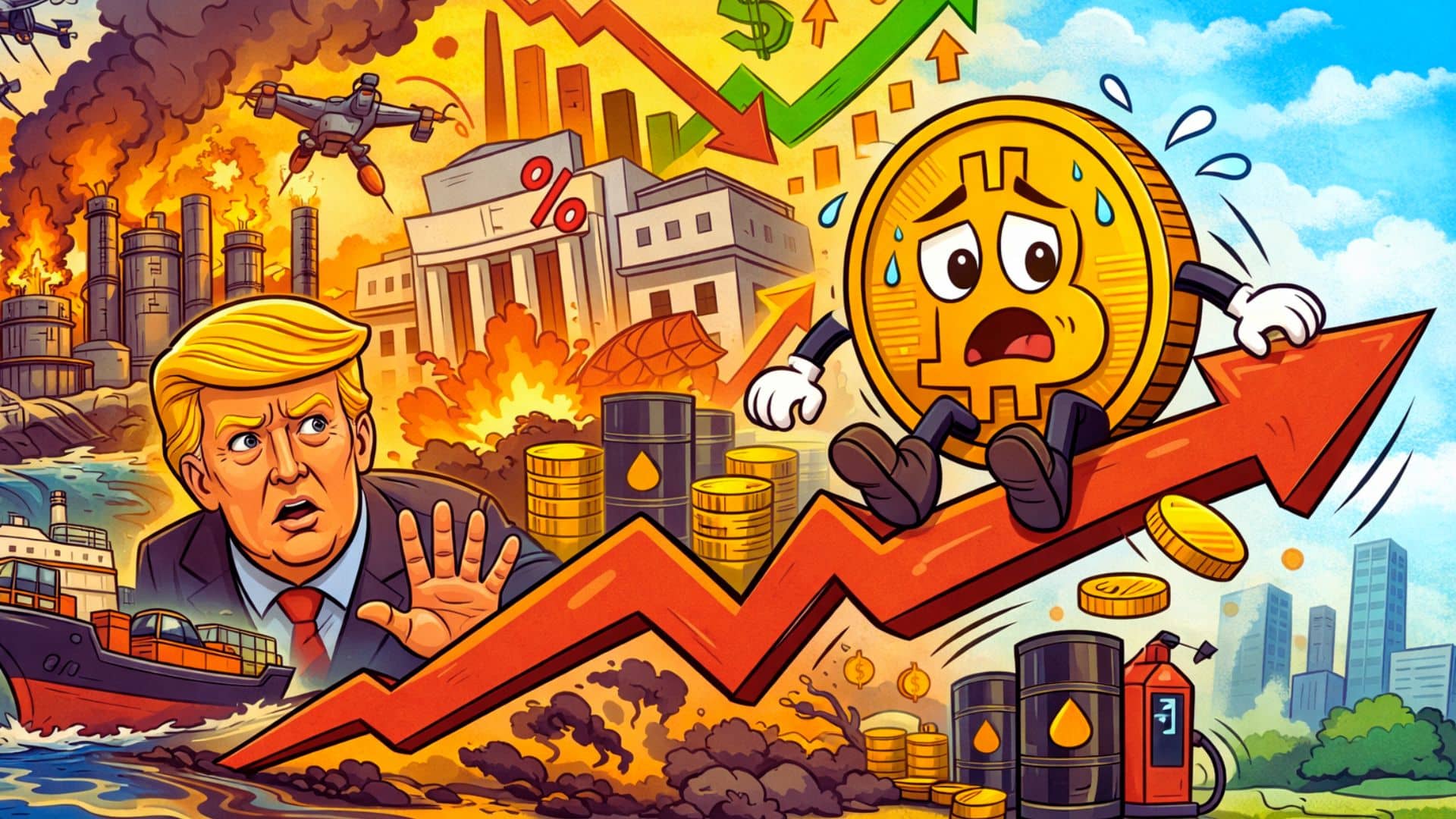

Bitcoin macro risks are rising fast, and the trigger sits far beyond crypto markets. A sudden shock in global oil supply has unsettled investors, raising fresh doubts about inflation and liquidity. What seemed like a controlled situation has slipped, and Bitcoin now faces a tougher road ahead.
According to the source, Ukraine’s strike on Russian oil infrastructure disrupted a key workaround meant to offset supply losses from the Iran war. This move did not just shake oil markets. It quietly amplified Bitcoin macro risks by reviving fears of rising oil prices and tighter financial conditions.
A Strategy Unravels: Trump’s Oil Plan Faces a Sudden Blow
The market had leaned on a temporary fix. The administration allowed more Russian crude to flow, hoping to calm rising oil prices caused by disruptions in the Strait of Hormuz. That plan worked, but only briefly.
Ukraine’s drone strikes on ports and refineries in Leningrad changed everything overnight. Nearly 40 percent of Russia’s export capacity went offline. This was not a small hit. It cut directly into the supply chain and exposed a fragile system.
An analyst explained in a recent analysis that the crisis is “a logistics problem first and a supply problem second.”
That insight matters. Oil may still exist, but moving it has become difficult, keeping rising oil prices elevated and adding to Bitcoin macro risks.
Bitcoin Macro Risks Surge as Rising Oil Prices Fuel Inflation
Bitcoin macro risks grow when inflation refuses to cool. Rising oil prices push transport and production costs higher. Businesses pass these costs on, and inflation sticks around longer than expected.
Here is where the chain reaction begins. Higher inflation forces central banks to act. They raise interest rates to slow spending. That move reduces liquidity in financial markets. Less liquidity means weaker demand for risk assets like Bitcoin.
Data from a market report shows traders now expect a possible rate hike within weeks. This shift signals that Bitcoin macro risks are not just theoretical. They are already shaping market behavior.
Why This Time Feels Different for Bitcoin
Bitcoin has faced macro pressure before, but this moment carries a sharper edge. Earlier cycles saw inflation driven by demand. Now, rising oil prices reflect supply shocks tied to geopolitics.
That difference matters. Supply-driven inflation lasts longer and proves harder to control. It creates repeated waves of Bitcoin macro risks instead of short bursts.
Bitcoin’s link with global markets has also deepened. Large institutions now treat it as a risk asset. When liquidity tightens, they reduce exposure. That is why Bitcoin macro risks now react faster to oil shocks than in previous years.
Market Snapshot: Range Holds, Pressure Builds
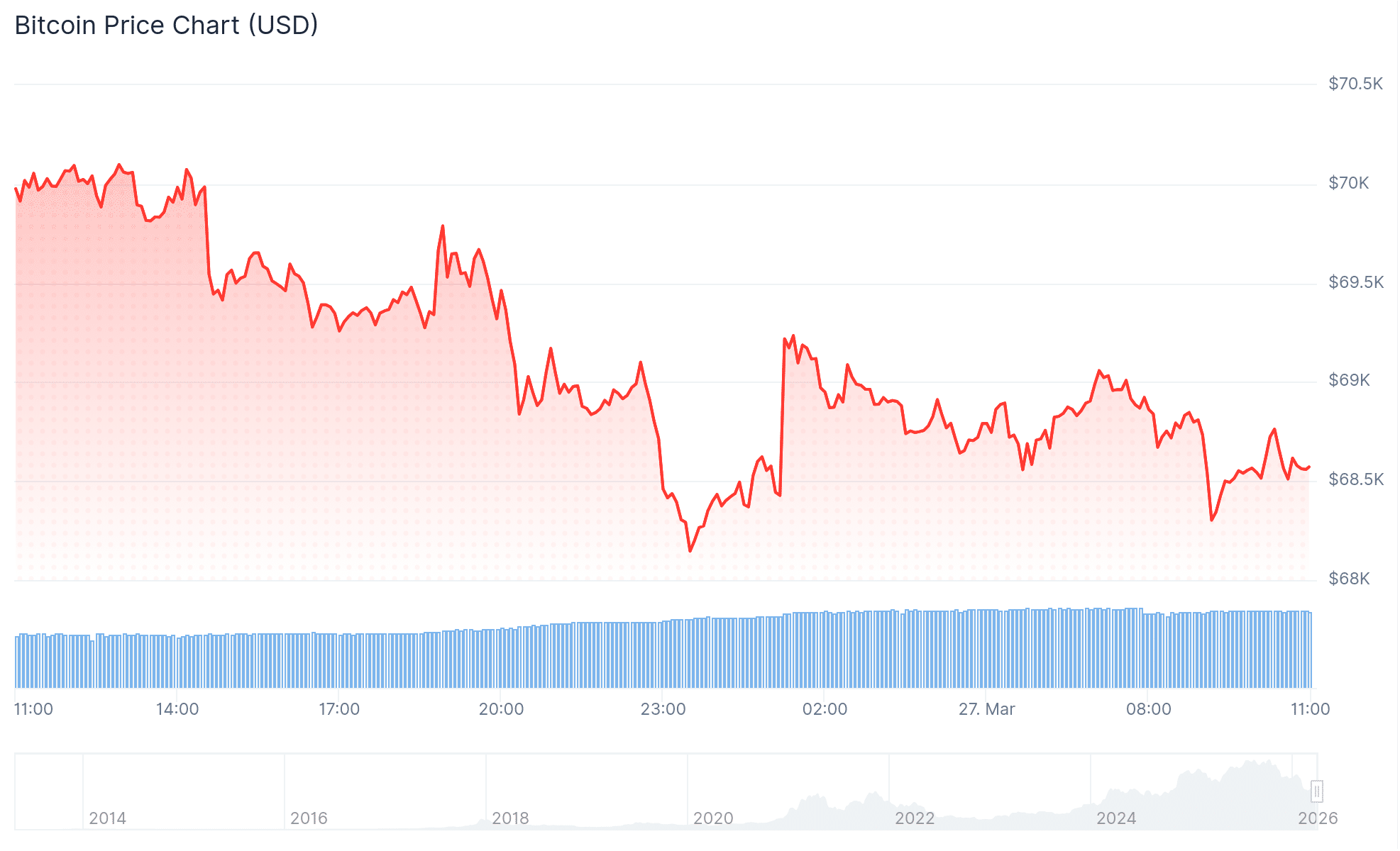
Bitcoin continues to trade between $65,000 and $75,000. At last check, it hovered near $68,500, slightly down on the day. The surface looks calm, yet pressure builds underneath.
At the same time, rising oil prices tell a different story. WTI rebounded near $93, while Brent moved back above $100. These levels reflect sustained stress in supply chains.
This gap creates tension. Bitcoin macro risks increase as macro signals worsen. If rising oil prices stay high, the current range may not hold. A downside move becomes more likely as liquidity tightens.
Conclusion
Bitcoin macro risks now sit at the center of a global puzzle shaped by energy, war, and policy. Ukraine’s strike did more than disrupt oil. It exposed how fragile the system had become and how quickly plans can fail.
Rising oil prices continue to push inflation higher, leaving central banks with limited options. For Bitcoin, this means a tougher path where macro forces dominate short-term direction.
The market now watches closely. If conditions stabilize, Bitcoin may hold its ground. If not, Bitcoin macro risks could turn into real price pressure. The next move may depend less on crypto trends and more on global stability.
Glossary of Key Terms
Bitcoin macro risks: External economic forces that influence Bitcoin price movements.
Rising oil prices: Increase in crude oil costs affecting global markets.
Inflation: Ongoing rise in general price levels.
Interest rates: Cost of borrowing controlled by central banks.
Liquidity: Ease of money flow within financial systems.
FAQs About Bitcoin Macro Risks
What are Bitcoin macro risks?
They refer to economic conditions like inflation and rates that impact Bitcoin prices.
Why do rising oil prices matter for crypto?
They increase inflation, which can reduce liquidity and weaken crypto demand.
Is Bitcoin likely to fall below $65,000?
It could happen if macro pressure continues to rise.
Why is inflation still a concern?
Supply shocks like oil disruptions make inflation harder to control.