

Global crypto regulations 2026 are transforming how digital assets function within financial markets, moving beyond conceptual frameworks into active implementation phases that directly influence institutional behavior, market oversight, and investor confidence. After years of uncertainty and fragmented policies, regulators in key jurisdictions have shifted their approach toward comprehensive frameworks that balance innovation with risk management.
- What Do Global Regulations Mean?
- How Has the Regulatory Landscape Evolved?
- What Factors Are Driving This Transition?
- How Is the United States Approaching Regulation?
- What Is Happening in the United Kingdom?
- What Is Hong Kong’s Strategy?
- How Are Institutions Responding?
- Conclusion
- Glossary
- Frequently Asked Questions About Global Crypto Regulations 2026
In the United States, legislation such as the GENIUS Act has been signed into law but awaits final rulemaking before its provisions take full effect. Across the United Kingdom and Hong Kong, regulators have introduced operational requirements covering stablecoins, licensing regimes, and consumer protections.
This regulatory momentum is altering market dynamics, shaping institutional strategies, and encouraging broader adoption of digital assets. The evolution of these policies in 2026 is not merely a legal development and represents a structural shift that is embedding digital finance into mainstream economic frameworks with clear expectations for how the industry must operate.
What Do Global Regulations Mean?
At its core, global crypto regulations 2026 refers to the wave of laws, frameworks, and supervisory standards that governments have instituted to govern digital assets in an increasingly interconnected financial system. These regulations define the rules for the issuance of stablecoins, the operation of trading venues, custodial responsibilities, taxation reporting standards, and anti‑money‑laundering compliance.

They extend beyond isolated country policies to represent a broader shift toward harmonized oversight that reduces uncertainty for multinational firms and institutional investors. In the United States, this process has been highlighted by the passage of the GENIUS Act in July 2025, a federal law designed to create a regulatory regime for payment stablecoins.
The law’s provisions, including reserve backing requirements and compliance timelines, are substantive, yet its operational components will not take effect until regulators complete implementing rules, expected by late 2026 or early 2027. In the U.K., the Financial Conduct Authority has transitioned from guidance to active enforcement, with licensing and consumer protection now woven into the fabric of crypto related service delivery.
Hong Kong, meanwhile, is laying the groundwork for a regional digital finance hub by clarifying requirements for fiat‑backed stablecoins and regulated virtual asset service providers. Together, these developments show how regulatory clarity is maturing into actionable oversight across major markets.
How Has the Regulatory Landscape Evolved?
The evolution toward global crypto regulations 2026 has unfolded over years of debate, market disruptions, and political negotiation. Early oversight efforts were often reactive, responding to exchange failures, fraud cases, and periods of extreme price volatility. These temporary and improvised measures left notable gaps in areas such as stablecoin governance, institutional participation, taxation, and cross‑border enforcement.
Over time, regulators began to recognize that digital assets were no longer peripheral experiments but integral components of the broader financial system. This realization led to laws and rules aimed at creating clear, consistent standards. In the United States, the GENIUS Act passed both houses of Congress in 2025 and was signed into law, setting a framework for stablecoin issuance and oversight.
Key agencies like the Office of the Comptroller of the Currency, the Federal Reserve, and the SEC are now working on detailed rules to guide licensing and supervision. By mid-2026, these regulations are expected to move from paper into enforceable standards.
The U.K.’s FCA has shifted from consultation to active supervision, enforcing AML/KYC rules and protecting consumers. Hong Kong is refining its fiat-backed stablecoin rules within a broader virtual asset licensing system. Together, these steps mark a shift from inconsistent policies to coordinated oversight across major markets.
What Factors Are Driving This Transition?
Several forces are driving the widespread adoption of global crypto regulations 2026, among them institutional participation, the growth of stablecoins, and geopolitical pressures. Institutional investors are deepening their exposure to digital assets, attracting scrutiny from prudential regulators and mainstream financial institutions. Stablecoins are now an important part of payments and settlements, so rules are being put in place to make the system safer.
International tensions and cross-border financial crimes are also shaping these rules. Geopolitical considerations, such as sanctions enforcement and cross‑border financial crime prevention, have further shaped regulatory expectations, compelling authorities to integrate blockchain analytics and compliance technologies into supervisory toolkits.
Rapid advancements in data analytics and artificial intelligence have enabled regulators and private institutions alike to monitor on‑chain activity with greater precision, bolstering enforcement efforts and enhancing risk detection. These interconnected trends make clear that regulatory evolution in 2026 is not a reactionary development but a structural adaptation to a market that is expanding in scale and complexity.
How Is the United States Approaching Regulation?
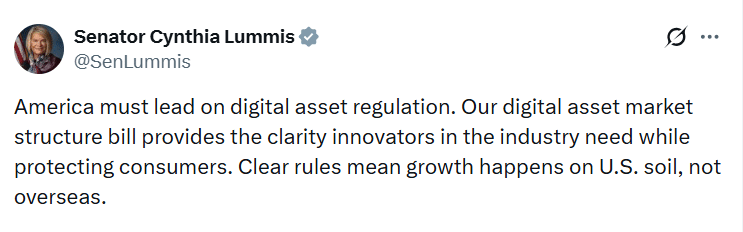
In the United States, 2026 is shaping up as a year of action rather than planning. Regulators are moving from drafting laws to implementing frameworks for stablecoins. The GENIUS Act, signed in July 2025, sets federal rules for issuance, requiring full backing by liquid assets, monthly attestations of reserves, and licensing for issuers.
While the law exists on paper, the operational phase depends on final rules from federal regulators, expected by mid-year, with full enforcement likely by late 2026 or early 2027. Companies remain cautious as they wait for the rules to take effect.
Financial institutions have debated the provisions, with some seeking protections for deposit bases tied to yield-generating stablecoins, while others question clarity and consistency. At the same time, the IRS’s digital asset reporting form, introduced in 2025, is now in its first full year of enforcement, reflecting the growing emphasis on tax compliance and accurate reporting.
These developments show how the United States is gradually integrating digital assets into the traditional financial system. They also form a key part of the evolving framework of global crypto regulations 2026, which is guiding how stablecoins, institutional participation, and compliance measures will operate across markets in the year ahead.
What Is Happening in the United Kingdom?
The United Kingdom’s regulatory environment moves in parallel with efforts underway elsewhere, focusing on consumer protection and structured oversight. The FCA’s licensing regime for exchanges, custodians, and other service providers has been fully operationalized in 2026, closing longstanding gaps in AML/KYC enforcement and risk disclosures.
The authority’s strategy combines firm supervision with innovation‑friendly initiatives, such as regulatory sandboxes that allow controlled testing of new digital finance products, including stablecoins and tokenized securities. By encouraging innovation within a structured compliance environment, the U.K. aims to strike a balance between expanding financial services and protecting consumers from fraud, market manipulation, and operational risk.
This approach has helped reinforce London’s standing as a global finance center while aligning digital asset markets with established prudential standards. Industry stakeholders in the U.K. have noted improvements in market clarity and reduced operational uncertainty, underscoring the practical effects of regulatory evolution that reflects global crypto regulations 2026.
What Is Hong Kong’s Strategy?
Hong Kong has pursued a distinct regulatory path that emphasizes both market development and risk controls. The region’s legislation for fiat‑backed stablecoins operates within a broader virtual asset licensing framework that requires transparency, governance standards, and clear reserve management.
Hong Kong’s regulators have made it a priority to attract both domestic and international firms, positioning the city as a regional hub for digital finance. By early 2026, these efforts have begun to yield participation from financial institutions and technology firms seeking a regulated environment that supports innovation without sacrificing oversight.
This strategy reflects broader trends in Asia, where regulators are watching international developments and calibrating local frameworks to support both market growth and investor protection. Hong Kong’s example highlights how jurisdictions can compete for digital capital while adhering to robust regulatory standards, contributing to the mosaic of policies that collectively define global crypto regulations 2026.
How Are Institutions Responding?
Institutional engagement with digital assets is deepening as regulatory clarity increases. Companies across industries are incorporating Bitcoin and other assets into their balance sheets, driven by strategic diversification and market demand. Financial firms are expanding custody solutions, tokenized products, and payment services that integrate stablecoins and other digital instruments, aided by clearer compliance expectations.

Regulatory sandboxes and pilot programs have enabled some of this experimentation to occur under controlled oversight. Market participants describe the current environment as one where operational certainty has replaced much of the ambiguity that once deterred larger institutions.
Technology plays a central role in this evolution, enabling real‑time surveillance, compliance automation, and enhanced risk management, all of which support institutional integration, under the framework of global crypto regulations 2026.
Conclusion
Global crypto regulations in 2026 mark a real shift in how governments oversee digital assets and weave them into the financial system. Major regions have moved past early ideas to set practical rules covering stablecoin issuance, institutional roles, consumer safeguards, taxes, and compliance requirements. In the U.S., the GENIUS Act sets a key milestone, though its full rollout awaits detailed agency rules that bridge law to everyday enforcement.
The UK and Hong Kong have rolled out their own clear frameworks too, striking a balance between fostering innovation and laying down firm operational guidelines. Corporations and ETFs now hold massive Bitcoin stashes, signaling rising institutional buy-in, while compliance tools grow more advanced to meet regulatory demands. Overall, these changes create a more transparent, accountable space for digital finance to thrive long-term alongside traditional markets.
Glossary
GENIUS Act: U.S. law setting rules for stablecoins and digital assets.
Licensing Regime: Official approval needed for crypto businesses to operate.
AML/KYC Compliance: Checks to prevent money laundering and verify users.
Fiat-backed Stablecoins: Cryptos supported by real currency for stable value.
Cross-border Enforcement: Global cooperation to enforce crypto rules and prevent fraud.
Frequently Asked Questions About Global Crypto Regulations 2026
Why are crypto regulations becoming stricter in 2026?
Crypto regulations are becoming stricter to protect users, reduce fraud, and make markets safer for institutions.
How do crypto regulations affect stablecoins?
Crypto regulations require stablecoins to be fully backed by assets and regularly audited.
How are institutions responding to crypto regulations?
Institutions are increasing crypto adoption because clear rules reduce legal and operational risks.
When will U.S. crypto rules fully take effect?
Most U.S. crypto rules are expected to be enforced by late 2026 or early 2027.
Which countries are leading crypto regulation changes?
The United States, the United Kingdom, and Hong Kong are leading major crypto regulation changes in 2026.