

Stablecoin risks are back in the spotlight as fresh warnings raise doubts about how safe these digital dollars really are. What seems steady in calm markets can quickly turn fragile when pressure builds, and that tension now defines the debate.
According to the source, Michael Barr of the Federal Reserve said the GENIUS Act brings clarity, yet does not erase stablecoin risks. He noted that clearer rules could support faster adoption, but added that much still depends on how regulators finalize and enforce those rules.
Growth Dreams Meet Real-World Pressure
Stablecoins can do now way more than just crypto trading. Their remit is evolving into cross-border payments, treasury operations and trade finance. These uses are meaningful because they link stablecoins to actual economic activity, not just online markets.
But this expanded role also poses stablecoin dangers. When companies use stablecoins for payments, or liquidity, any instability can echo through systems. Trust then becomes the bedrock, and the moment chargers are shaken, recovery can turn a long process.
Stablecoin Risks Rise When Redemptions Spike
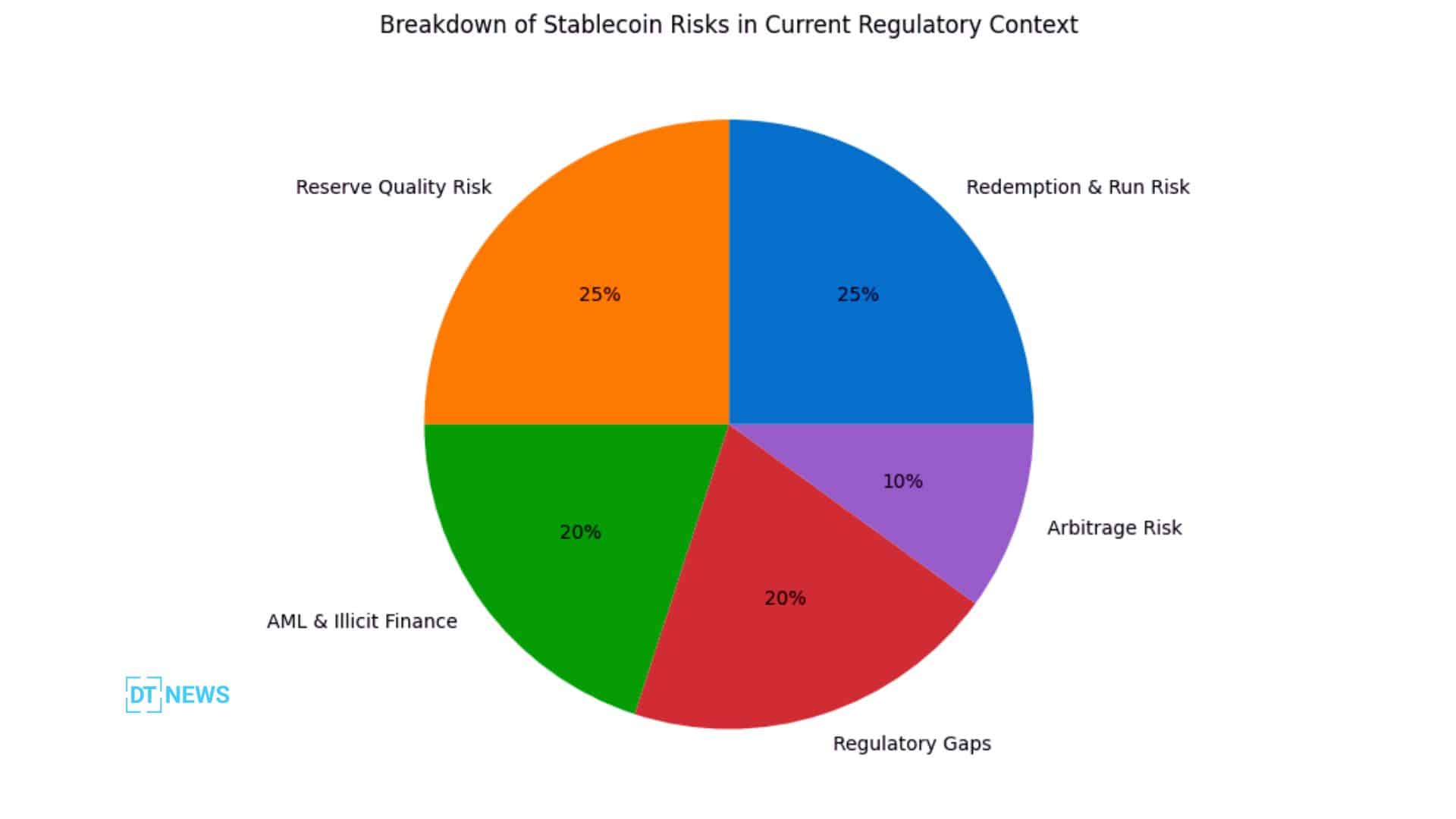
Stablecoin risks often surface during redemption stress. Users expect to convert tokens into cash at any time. Yet when many try to exit together, pressure builds fast.
This is how a “run” begins. Early redeemers go smoothly, but with reserves running low will experience delay or loss. That induces panic, leading other users to pull out. The cycle feeds itself. This creates a liquidity gap where assets cannot be sold quickly enough to respond to demand, which forces losses and heightens panic.
Financial history offers clear warnings. Events such as the Panic of 1907, the Global Financial Crisis and the COVID-19 market shock demonstrate how quickly trust can disintegrate when liquidity comes to the fore. So stablecoin risk behaves like other risks, only it’s faster in digital markets.
Reserve Quality And The Hidden Risk Tradeoff
At the core of stablecoin risks lies reserve strength. These reserves must stay liquid and safe, yet issuers often face pressure to generate returns.
This creates a quiet tension. Higher yields can boost profits, but they also increase risk. This tension creates a conflict where profit goals may push issuers toward riskier assets, while users expect full safety at all times. Lower risk protects stability but limits earnings. This balance defines the trust users place in stablecoins.
Barr warned that even assets like government securities may face liquidity stress. Even high-quality assets can become hard to sell during market shocks, creating delays in meeting redemptions. If reserves cannot meet demand quickly, stablecoin risks rise sharply. The GENIUS Act sets limits on reserve quality, but real safety depends on how issuers behave under pressure.
AML Gaps And The Secondary Market Problem
Stablecoin risks also extend into compliance gaps. While primary platforms may follow strict identity checks, secondary markets often do not.
This creates a loophole. Stablecoins can move between users without clear tracking, making it harder to detect illicit activity. Risks tied to money laundering and unauthorized transfers grow in such environments.
Barr stressed that solving this issue requires both regulation and technology. In a recent policy speech, he noted that safeguards must evolve alongside innovation. Without that, stablecoin risks could spill beyond crypto into wider finance.

GENIUS Act Rules Face Execution And Global Gaps
GENIUS Act provides a framework, but stablecoin risks depend on execution There are key areas without clear rules, such as the monitoring of reserves, how much capital issuers must have on their books, liquidity management, anti–money-laundering checks, user protection and issuance restrictions.
But loopholes could remain without rigorous enforcement. It is also an international problem. If the rules vary from one country to another, this will incentivize firms to seek out jurisdictions with weaker ones. It also creates regulatory arbitrage: risks become transferrable.
This patchy oversight can amplify stablecoin risks globally, especially as adoption rises.
Conclusion
Though the GENIUS Act provides some structure, stablecoin risks are still a work in progress. The stability does not depend only on rules, but behaviour, transparency and regular oversight.
Barr’s message is clear. While innovation can be rapid, trust-building is a gradual process. As stablecoins infiltrate real-world finance, the handling of stablecoin risk will determine if they evolve into trustworthy financial tools or combustible systems under stress. The next stage will challenge not just innovation, but the integrity of the rules that govern it.
Glossary of Key Terms
Stablecoins: Digital tokens designed to hold a steady value, usually tied to a fiat currency.
Redemption: The process of exchanging stablecoins for real-world currency.
Liquidity: The ease of converting assets into cash without major loss.
AML: Regulations that prevent illegal financial activities.
Regulatory Arbitrage: Moving operations to regions with weaker financial rules.
FAQs About Stablecoin Risks
What are stablecoin risks?
Stablecoin risks include liquidity stress, weak reserves, and misuse in illicit finance, which can affect their reliability.
What does the GENIUS Act do?
The GENIUS Act sets rules for stablecoin issuers, focusing on reserves, compliance, and financial stability.
Why are redemption runs dangerous?
They can drain reserves quickly and trigger panic, leading to loss of confidence in stablecoins.
How do secondary markets increase risk?
They allow transactions without strong identity checks, making it harder to track illegal activity.