

























This article was first published on Deythere.
- United States: First Federal Stablecoin Framework Becomes Law
- Hong Kong and UAE: High-Compliance Centers for Stablecoins
- Brazil and India : Compliance and Registration
- Pakistan: From Uncertainty to Structured Oversight
- Australia, Malaysia, and Japan: Maturing Regulatory Models
- What 2025 Will Look Like for Digital Money
- Conclusion
- Glossary
- Frequently Asked Questions About Crypto Regulation 2025
- What was the GENIUS Act?
- Who were the early adopters of stablecoin licensing in 2025?
- What did crypto regulation in Pakistan look like by 2025?
- What was the trend that shaped global regulation in 2025?
- References
Regulation became a reality in 2025, not for most of the world, but in major operational markets. Governments and regulators moved away from a stance of caution towards active rulemaking, treating digital assets as part of the larger financial family.
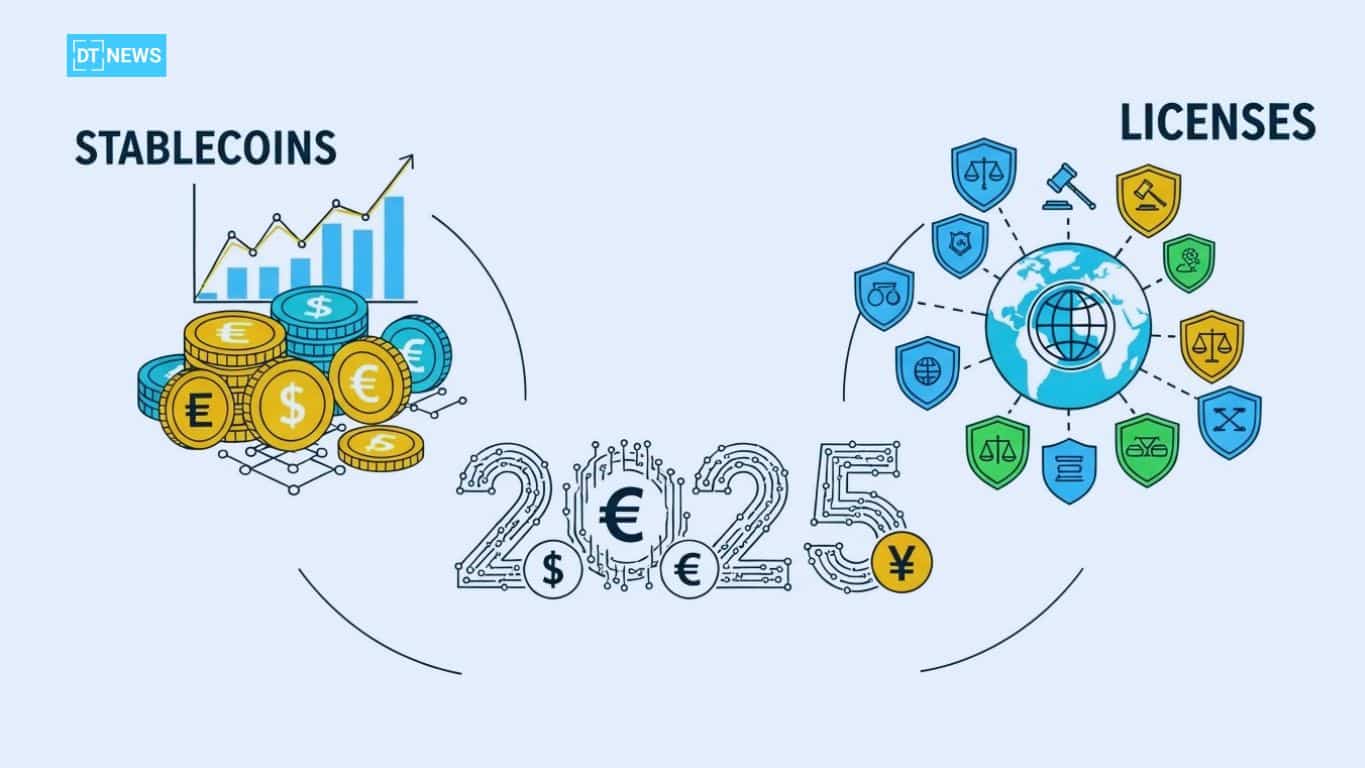
Fiat-backed tokens, stablecoin visibility, licensing regimes, and custody standards were the predominant themes on regulatory platforms. From the US and Hong Kong to Brazil, the UAE, India, Pakistan, Malaysia and Australia we were not left out.
These developments have effects on how institutions will participate in, payment mechanisms and consumer protection around digital asset use, and the eventual integration of digital assets into traditional finance.
United States: First Federal Stablecoin Framework Becomes Law
The most significant crypto regulation of 2025 was the enactment of the Guiding and Establishing National Innovation for U.S. Stablecoins Act (GENIUS Act) by President Donald Trump on July 18, 2025. This established the first full federal framework for stablecoins in the United States.
GENIUS Act is also based on the premise that stablecoins should be backed one-to-one with U.S. dollars or assets of similar liquidity, that issuers must disclose reserves and provide oversight to financial regulators (with anti-money laundering requirements), and establish a two-tier structure where the largest issuers are subject to federal supervision while smaller ones might be regulated at the state level.
The law also makes it illegal to misrepresent that stablecoins are federally insured or backed by the government and applies federal consumer protection laws to stablecoin activity.
This is a switch from ambiguous guidance to actionable standards, similar to those that have been implemented for other payment systems and bank products.
Hong Kong and UAE: High-Compliance Centers for Stablecoins
In Asia, regulators have acted quickly on stablecoins and licensing, making crypto regulation 2025 a question of operational compliance rather than speculation.
Hong Kong’s fiat-linked stablecoin licensing framework, required by the Hong Kong Monetary Authority (HKMA), took effect in August of 2025 and mandated that issuers need to obtain prescribed licenses and meet stringent capital, operational, and anti-money laundering requirements.
This law is designed to reinforce financial stability and transparency as part of the city’s strategy to serve as a regulated digital finance hub.
Similarly, the United Arab Emirates strengthened its oversight of stablecoin activity and digital asset firms through expanded regulatory approvals in jurisdictions like the Abu Dhabi Global Market (ADGM), where both Tether and major licensed exchanges like Binance were granted formal regulations that apply to their use of stablecoins.
These are steps the UAE took to show that it values institutional credibility more than sandbox permissiveness.
Brazil and India : Compliance and Registration
Brazil Regulatory progress in 2025 saw its continuation within the context of the Virtual Assets Law (Law No. 14,478/22), which is being developed through public consultations and further regulations. The measures are expected to link stablecoins and virtual assets under legislation with such systems as those imposed on banks and foreign exchange now.
Crypto adoption in India is one of the highest in the world. However, despite strong usage and remittance demand, legal clarity is a mystery with authorities intensifying anti-money-laundering registration requirements and enforcement actions against unlicensed activity while tokenization initiatives attract legislative interest.
The regulations here mirror a balance between incentive for growth and the need for oversight.
Pakistan: From Uncertainty to Structured Oversight
One distinctive example that showcases crypto regulation in 2025 is Pakistan, where there was a combined effort from public and private entities to create a regulatory framework for digital assets.
The Pakistan Crypto Council (PCC) was established in March 2025 to develop and coordinate blockchain policy within ministries and financial institutions. Changpeng Zhao, Binance co-founder, was made a strategic adviser, evidence of Pakistan’s intent to ensure its local regulation is in line with global standards.
As of July 8, 2025, Pakistan had introduced the Pakistan Virtual Assets Regulatory Authority (PVARA) under the Virtual Assets Ordinance, 2025 and in effect institutionalizing licensure, oversight and compliance for virtual asset service providers.
This development was a clear statement that Pakistan didn’t consider crypto as a challenge, but in fact a financial tool which needs structured regulatory control.
Further, there are also reports of Pakistan being in talks to develop a rupee-backed stablecoin for local payments and remittances, paving the way for digital assets to become more ingrained with monetary infrastructure.
Australia, Malaysia, and Japan: Maturing Regulatory Models
Elsewhere in the Asia-Pacific, crypto regulation 2025 was fleshed out as jurisdictions worked on licensing and institutional coverage.
In Australia, the Australian Securities and Investments Commission (ASIC) signed a memorandum of understanding with the financial regulators in India to promote cross-border regulatory cooperation through sharing information and setting similar expectations for compliance, to facilitate oversight of digital assets.
It also extended prior foundational legislation that allowed some digital exchange activities to go on without initial supervisor approval, as long as strict standards related to the quality of assets and their trading history were met.
On another side, Malaysia brought in custody and hot wallet protections that help to safeguard user funds while also spurring innovation.

In Japan, the regulators leaned towards re- categorizing cryptos as financial products under the Financial Instruments and Exchange Act; to comply would mean that issuers, exchanges and token sales will have to adhere to disclosure, audit and governance requirements for public market securities.
This change, together with the previously announced tax amendments for reducing capital gains tax, demonstrates Japan’s growing acceptance of crypto as part and parcel of mainstream finance.
What 2025 Will Look Like for Digital Money
The pattern of crypto regulation 2025 is obvious: governments are piecing together visibility, control, and integration instead of stifling. Stablecoins, once eyed with suspicion, are now at the core of regulation because they touch payments, financial stability and cross-border trade.
Regulators no longer question whether it exists, they establish parameters for operation, oversight and compliance.
This transformation did not destroy markets; it transformed them. Capital is now flowing toward jurisdictions and clear rules and innovation continues to happen in frameworks that hold issuers and intermediaries accountable.
From U.S.-level federal laws to Asia’s licensing regimes and emerging oversight in South Asia and the Middle East, the regulatory blueprint for 2025 emphasizes structure over grey areas.
Conclusion
The year 2025 will be remembered as one where crypto regulation transitioned from guidance to enforcement. Across the United States, Asia and beyond, lawmakers drew up structures for stablecoins, licensing, custody and compliance that help digital assets fit into existing financial systems.
Far from being innovation killers, these rules set expectations, cut down on legal ambiguity, and signify that digital assets are now part of the global financial system.
As the industry works through 2026, the age-old question remains not if crypto will be regulated, but to what degree and how harmonized will those regulations be across the globe.
Glossary
Crypto regulation 2025: The aggregate body of national laws, licensing regimes, and compliance rules established in 2025 to govern any digital assets, stablecoins, and services related.
Stablecoin: A cryptocurrency that is linked to an asset (like fiat currency) and offers a reliable medium of exchange.
Licensing regime: The legal requirements that crypto firms would have to fulfill to stay in business, such as capital, transparency and operational standards.
Anti-Money-Laundering (AML): Legal requirements to establish rules for preventing the actions of criminals, processing related to identity verification and monitoring/reporting suspicious activity.
Virtual Asset Service Provider (VASP): An entity that offers services such as exchanges, custody, or issuance of digital tokens, subject to regulatory oversight.
Frequently Asked Questions About Crypto Regulation 2025
What was the GENIUS Act?
The GENIUS Act, signed July 18th, 2025, is aimed at setting standards for reserve backing, transparency, and AML compliance and licensing for issuers of stablecoins.
Who were the early adopters of stablecoin licensing in 2025?
Hong Kong initiated a licensing plan for fiat-backed stablecoin providers; the U.S. codified stablecoin regulation on the federal level; Singapore and Australia grew their virtual asset supervision frameworks.
What did crypto regulation in Pakistan look like by 2025?
Pakistan established the Pakistan Virtual Assets Regulatory Authority (PVARA) and the Pakistan Crypto Council to adhere to blockchain policy and licensing into national finance.
What was the trend that shaped global regulation in 2025?
Policy implications were centered around stablecoins, with an emphasis on regulation/Anti-Money Laundering (AML) compliance of exchanges and other software companies, as well as how digital assets integrate with traditional finance.