



























This article was first published on Deythere.
- Merchant Adoption Is Growing Fast
- Hybrid Crypto-to-Fiat Systems Bring Practicality
- Invisible Payment Infrastructure Is Being Embedded
- Stablecoins and Infrastructure Support Growth
- Conclusion
- Glossary
- Frequently Asked Questions About Crypto Payment Adoption in 2026
- How common is merchant acceptance of crypto in 2026?
- Why do businesses prefer hybrid payment systems?
- Are stablecoins needed for cryptocurrency payments?
- Will customers notice crypto at checkout?
- References
Across the U.S. and the global markets at large, merchants and payment platforms are adding digital asset settlement solutions into their business processes. Rather than focusing on volatility or holding crypto, companies are prioritizing settlement certainty, ease of integration and compliance with regulations.
Recent adoption data and merchant research confirm that crypto payments have become a full-fledged aspect of normal commerce.
Merchant Adoption Is Growing Fast
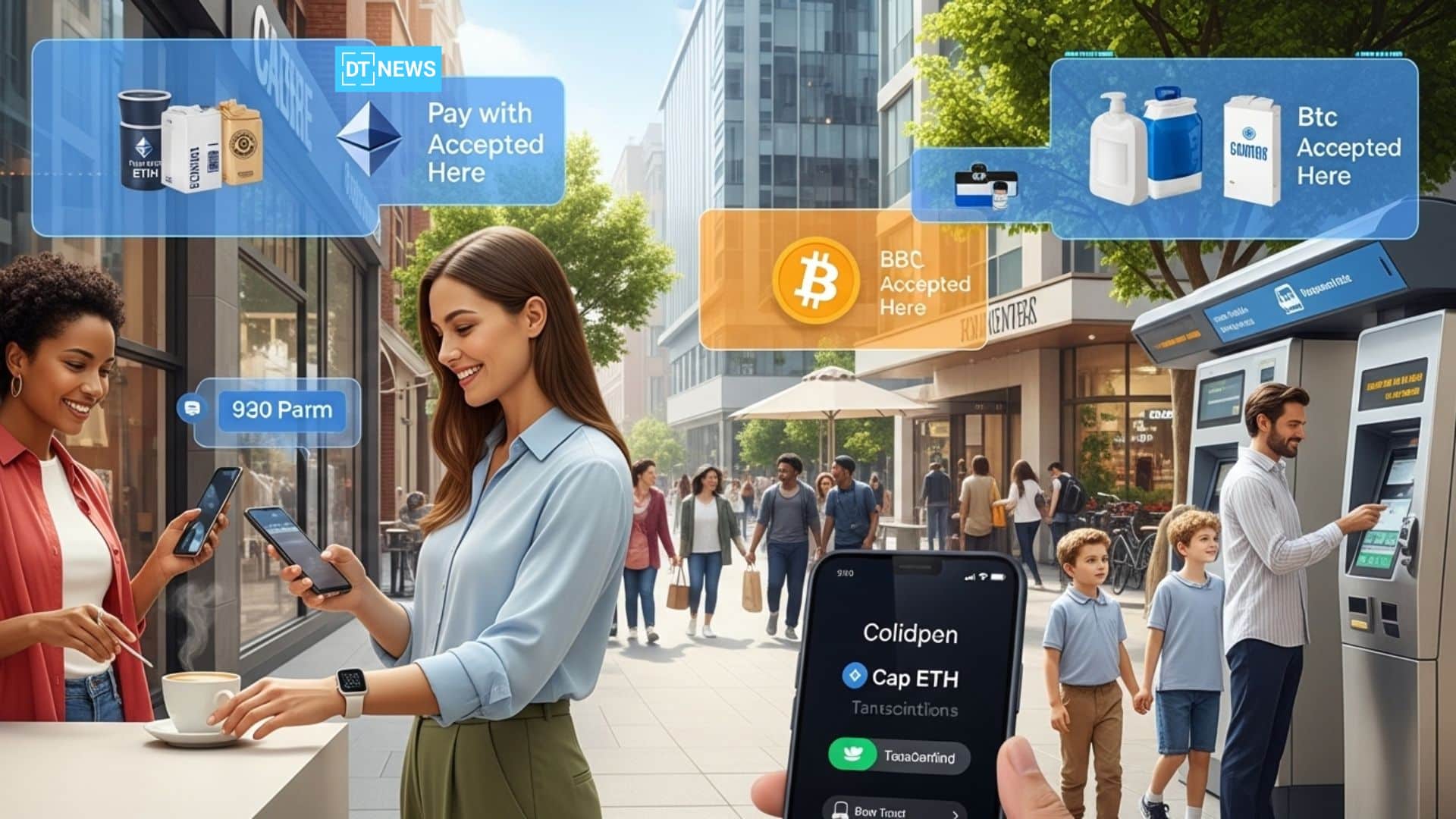
A new survey released by PayPal and the National Cryptocurrency Association found that nearly 40 percent of American merchants are now taking digital currency at checkout, which is a far cry from just a few years ago.
Digital payments are no longer a luxury for many businesses. Merchants in retail, hospitality, e-commerce and gaming report that customers actively ask to pay with crypto and those who have adopted are seeing meaningful transaction volumes.
According to the survey, crypto accounted for as much as 26 percent of sales for some adopters, meaning that when customers use crypto payments, it can contribute materially to revenue.
Younger consumers, including Millennials and Gen Z, are the ones pushing this demand. Businesses are also seeing crypto acceptance as a competitive advantage to attract digital-native buyers.
Close to 80 percent of the sellers surveyed said adding crypto enabled them to bring in new customers.
Hybrid Crypto-to-Fiat Systems Bring Practicality
The biggest change in crypto payments seen in 2026 is the widespread adoption of hybrid crypto-to-fiat processors. These services enable customers to pay merchants in digital assets, while the businesses are settled with fiat currency.
Companies like BitPay, CoinGate, NOWPayments, and ForumPay are growing these services to include billing, recurring payments, and in-app checkout experiences, all without exposing merchants to the challenges of directly holding crypto.
From a functional standpoint, hybrid payments work as much as card transactions do, but the settlement layer operates on blockchain rails. Merchants get predictable settlement timing and easy accounting integration, all while the complexity of crypto is kept in the background.
This approach resolves a long-standing business issue surrounding volatility and uncertainty of regulations.
One striking example of hybrid payments gaining traction is how PayPal characterizes adoption. More companies are treating crypto payments as a component of everyday commerce rather than an experimental feature.
“Crypto payments are moving beyond experimentation and into everyday commerce,” said May Zabaneh, Vice President and General Manager of Crypto at PayPal.
Invisible Payment Infrastructure Is Being Embedded
Another crypto payment trend to be seen in 2026 is the integration of payment infrastructure directly in business apps and platforms. Instead of presenting crypto as a standalone option, APIs and backend tools allow transactions to process using blockchain rails without users even knowing.
The integration includes in-app purchases, recurring billing, payouts and international payments.
It is expected that in 2026, most companies will accept crypto without advertising it as a unique feature. Customers will simply choose their preferred payment method at checkout without seeing the blockchain underneath.
This aligns with how digital payment innovation typically succeeds: by becoming invisible yet foundational.
Platforms like WalletConnect Pay are bringing this hidden infrastructure out more. Their CEO, Jess Houlgrave, points out the need to make blockchain settlement so seamless that merchants will be able to manage refunds, conversions and settlement timing, just as they do in traditional card systems.
Stablecoins and Infrastructure Support Growth
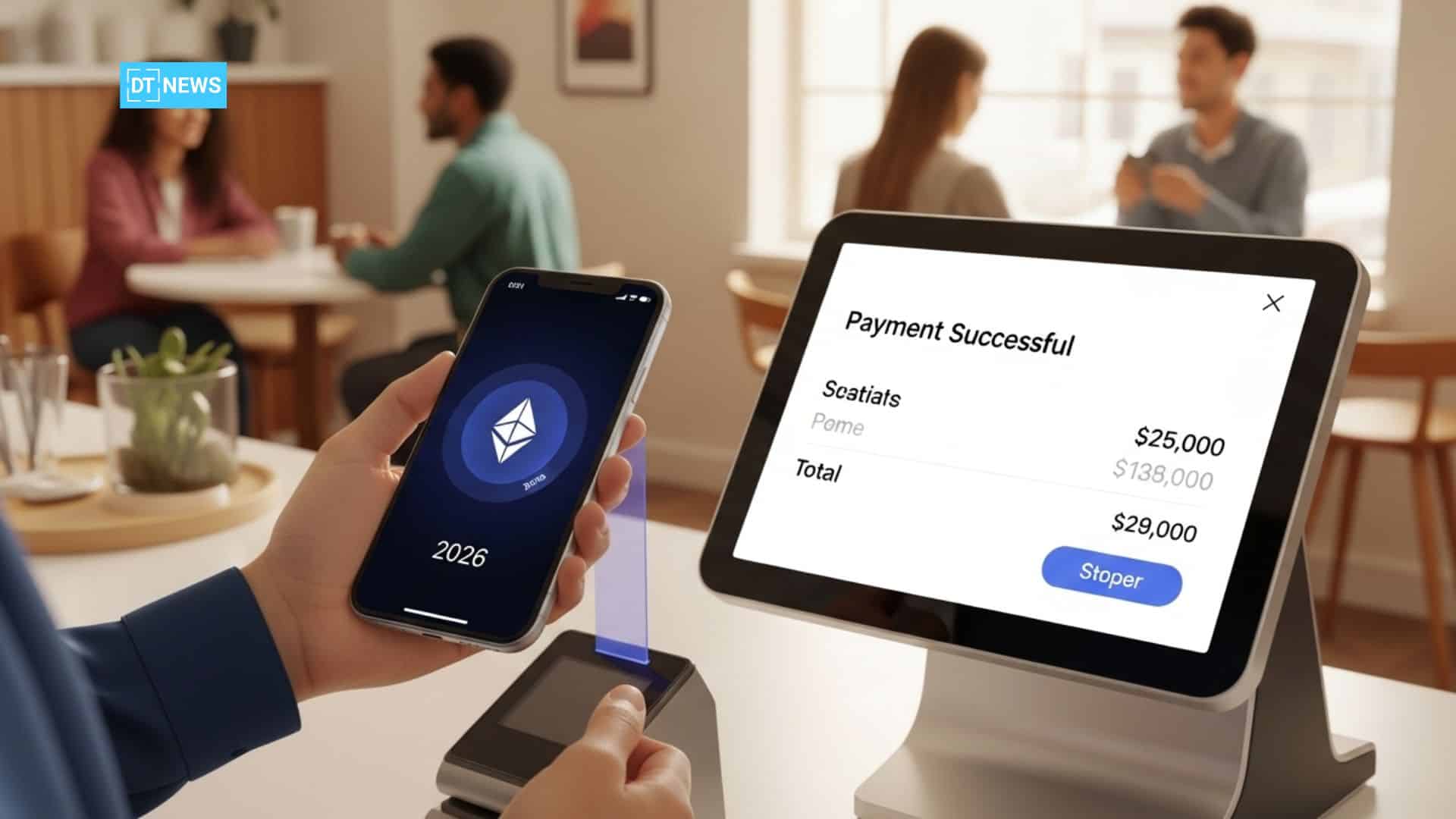
Another element of crypto payments in 2026 is the use of stablecoins. Stablecoins such as USDC are increasingly used as backend settlement rails for merchants and cross-border transactions.
Since they have a stable value, they are better designed for day-to-day payments than wild crypto assets. Recent data indicates that, eventually, stablecoins will being used be infused in B2B payment flows and have been adopted by major payment companies as well as banks worldwide.
To buttress this, international banks and financial corporations are developing regionally regulation-compliant stablecoin payment solutions.
Even traditional payment companies like Visa and Mastercard are deepening their blockchain ties. Data shows that Visa makes up the lion’s share of on-chain card transaction volume, which covers a large portion of all crypto-linked card activity.
Conclusion
The progress of crypto payments in 2026 is all about normalizing, reliability and merchant enablement. The technology behind the payments will recede into the background as payments become more secure, familiar and compliant to businesses.
Even so, the trends seem to point out more growth to come as merchant adoption surveys show a widespread expectation that digital asset payments will be mainstream in five years.
Opening up payment rails for blockchain infrastructure means that businesses can capitalize on global customer demand for frictionless, fast and secure digital payments.
Glossary
Hybrid crypto-to-fiat processor: a service that enables users to pay with digital assets and merchants to receive them in fiat settlements, making it so blockchain rails can be embedded into conventional business processes.
Stablecoins: are a form of digital asset with an intrinsic stable value (usually pegged to a fiat currency) that facilitates paying and settlement transactions across countries.
Embedded payment infrastructure: the backend payment systems that work with blockchain to process transactions, but hidden from the end user.
Merchant adoption: the rate of businesses allowing digital asset payments at the point-of-sale, and is a measure of actual commercial use as opposed to niche markets.
Frequently Asked Questions About Crypto Payment Adoption in 2026
How common is merchant acceptance of crypto in 2026?
According to recent surveys, 40% of U.S. merchants now accept crypto payments, and larger enterprises are leading the way, with many small businesses following suit.
Why do businesses prefer hybrid payment systems?
Hybrid systems allow consumers to spend in crypto and merchants to receive in fiat, cutting exposure to volatility and helping integration with current accounting and billing processes.
Are stablecoins needed for cryptocurrency payments?
Yes. Stablecoins like USDC are increasingly used as settlement rails because they offer quick, predictable settlement without the price volatility of traditional cryptocurrencies.
Will customers notice crypto at checkout?
In 2026, a lot of systems are expected to make crypto payments frictionless to customers, handling the blockchain settlement in the background and presenting checkout interfaces users already know.
References
Coin Republic
Genfinity
CryptoSlate
SQ Magazine
Techpoint Africa