
Cardone Capital tokenization is no longer a quiet concept as it is now a public signal that traditional real estate may be preparing for a blockchain shift. When a firm managing billions in property begins exploring digital tokens, markets pay attention.
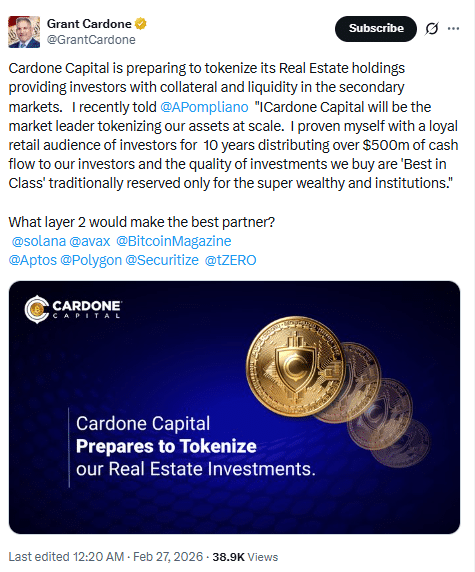
According to the source, Grant Cardone confirmed that Cardone Capital tokenization is actively in preparation. More importantly, he publicly raised a direct question about which Layer 2 network should power the move. The discussion was shared openly, including on social platform X, making it clear that the decision remains undecided. That public invitation has sparked debate among crypto developers and investors alike.
A Public Question That Signals Strategic Intent
Cardone did not quietly test blockchain behind closed doors. He openly asked which Layer 2 network would make the best partner for Cardone Capital tokenization. That detail matters. It shows the infrastructure choice is still under review.
Layer 2 networks sit on top of base blockchains like Ethereum. They reduce congestion, lower fees, and speed up transactions. For tokenized real estate, that efficiency is critical. A wrong choice could slow adoption. A strong Layer 2 could scale globally.
Some Layer 2 ecosystems already specialize in decentralized finance and tokenized assets. Their growing focus on real world assets suggests Cardone Capital tokenization may align with platforms already built for this purpose.
Turning Physical Property Into Tokenized Real Estate
Cardone Capital tokenization aims to convert portions of its real estate holdings into blockchain based digital shares. Investors would not need to purchase entire properties. Instead, they could buy fractional ownership recorded securely on-chain.
Tokenized real estate changes the mechanics of ownership. Smart contracts can automate dividend distributions, which means rental income can flow to token holders without manual processing. Transfers of ownership can settle faster than traditional paperwork driven transactions.
Research published by a major consulting firm estimates that tokenized assets could reach trillions of dollars by 2030. The report highlights real estate as a leading candidate for blockchain integration. Cardone Capital tokenization fits directly into that broader trend.
Operational Scale: Where Layer 2 Becomes Essential
Tokenizing property is more than creating digital tokens. Cardone Capital tokenization would need to support thousands of investors across multiple buildings. That means handling dividend payouts, ownership transfers, and strict compliance requirements without delays.
Manual dividend payments can be slow and prone to mistakes. Real estate investments also fall under securities rules, which require identity checks and regulatory screening for every investor. Managing this at scale can quickly become complex.
Layer 2 networks help ease that burden. Lower fees make small dividend payments practical, while faster settlements reduce back-office delays. Ethereum’s scaling framework shows how Layer 2 boosts transaction capacity without sacrificing security. That efficiency is what makes large-scale tokenized real estate workable.
Expanding Access Beyond Borders
Cardone Capital tokenization signals global ambition. Traditional real estate often limits access to local or accredited investors. Geography and high capital requirements keep many people out.
Tokenized real estate can lower those barriers. Investors from different regions may gain property exposure without physical presence, as long as regulations are followed. This wider access can grow the investor base and improve liquidity.
For crypto users, it connects digital capital to real buildings. For traditional investors, it offers blockchain exposure without leaving behind familiar property fundamentals.
DeFi Integration and Liquidity Potential
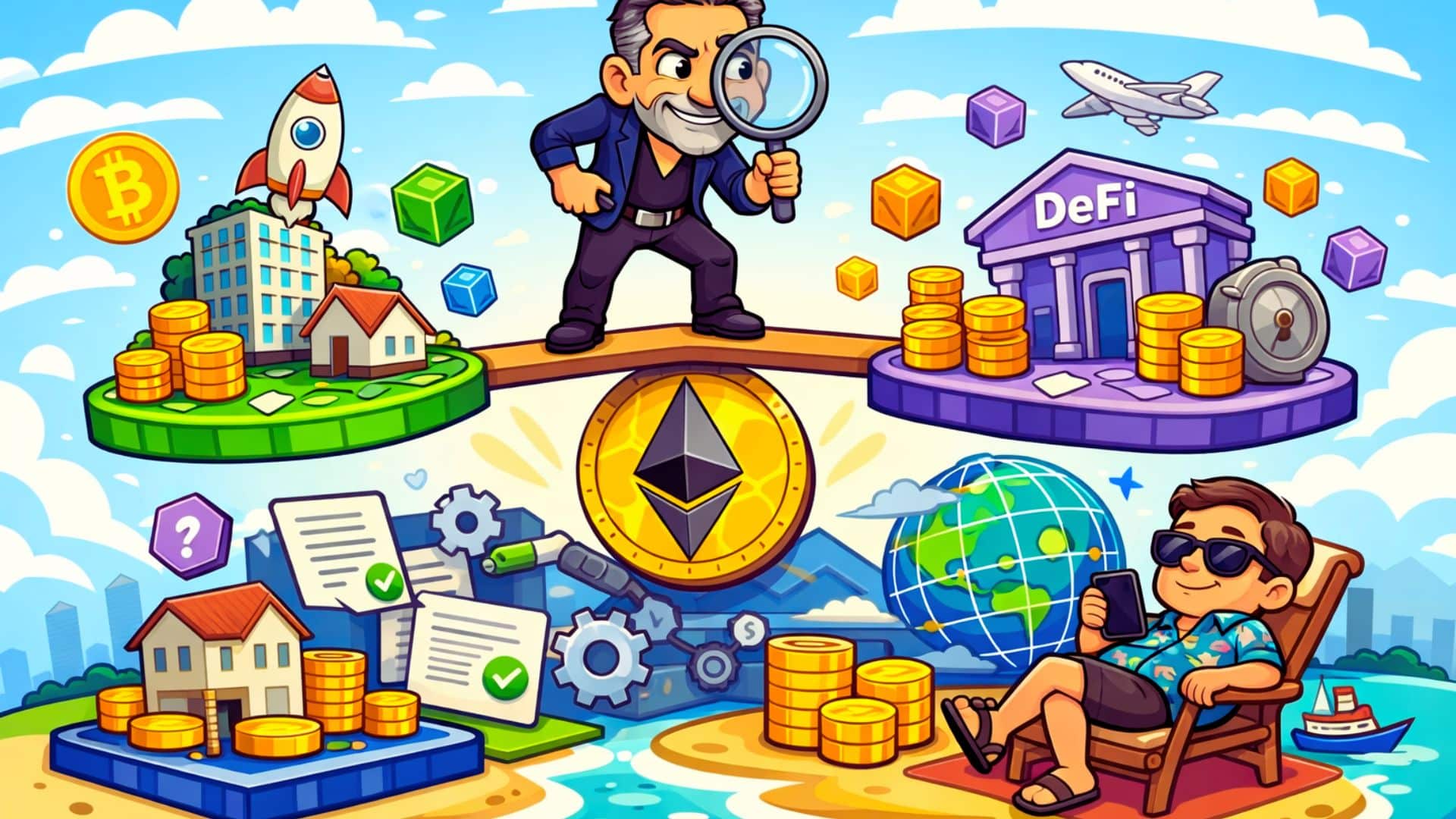
Several Layer 2 networks already support decentralized finance ecosystems. Cardone Capital tokenization could eventually connect tokenized real estate to DeFi liquidity pools, lending platforms, or collateral systems.
Such integration may enhance liquidity. However, it also increases complexity and regulatory scrutiny. Any connection between tokenized real estate and DeFi must balance innovation with investor protection.
Conclusion
Cardone Capital tokenization represents a serious step toward merging real estate with blockchain infrastructure. The public search for a Layer 2 partner shows that the project remains in a critical decision phase.
The Layer 2 network Cardone ultimately selects may determine how efficiently dividends flow, how smoothly compliance operates, and how quickly global investors gain access. Timing and execution will shape trust. If infrastructure, regulation, and demand align, Cardone Capital tokenization could become a defining case study in real world asset adoption. The market now waits for the next move.
Glossary of Key Terms
Cardone Capital Tokenization: The plan to convert portions of Cardone Capital’s property holdings into blockchain based digital tokens.
Tokenized Real Estate: Digital representation of property ownership recorded on a blockchain network.
Layer 2: A scaling solution built on top of a base blockchain to improve speed and reduce costs.
Smart Contracts: Self executing blockchain programs that automate transactions and distributions.
FAQs About Cardone Capital Tokenization
What is Cardone Capital tokenization?
It is the initiative to issue blockchain based tokens representing fractional real estate ownership.
Why is the Layer 2 choice important?
It affects transaction speed, cost efficiency, scalability, and investor experience.
Can tokenized real estate support global investors?
Yes, blockchain can reduce geographic barriers, subject to regulatory compliance.
Is the Layer 2 partner decided?
No, Grant Cardone publicly stated that the decision is still under consideration.