

Bybit retail banking is set to roll out personal bank accounts with IBANs in February 2026, giving users immediate access to fiat funds and the ability to make transfers in multiple currencies, alongside crypto trading. The My Bank service, powered by Bybit, allows users to manage both traditional banking and digital assets in a single account, with all transactions carried out under their own name.
- What Features Will Bybit Retail Banking Offer?
- Which Partners Are Supporting Bybit Retail Banking?
- How Will Users Benefit from Bybit Retail Banking?
- How Does Bybit Retail Banking Fit Into the Company’s Strategy?
- How Has Bybit Recovered From Past Challenges?
- What Are the Regulatory and Operational Considerations?
- How Does Bybit Retail Banking Compare With Industry Trends?
- What Users Should Know About Bybit Retail Banking?
- Conclusion
- Glossary
- Frequently Asked Questions About Bybit Retail Banking
Headquartered in Dubai, Bybit is recognized as one of the largest cryptocurrency exchanges by trading volume and aims to make financial management simpler for its global users. With these accounts, users will be able to deposit fiat currency, pay bills, receive salaries, and trade cryptocurrencies directly from their personal accounts without relying on third-party services.
What Features Will Bybit Retail Banking Offer?
Bybit retail banking will offer accounts with International Bank Account Numbers (IBANs), allowing users to make international transfers in up to 18 different currencies. At the start, US dollar transfers will be fully supported. Users can access their accounts immediately after completing Know Your Customer (KYC) verification.
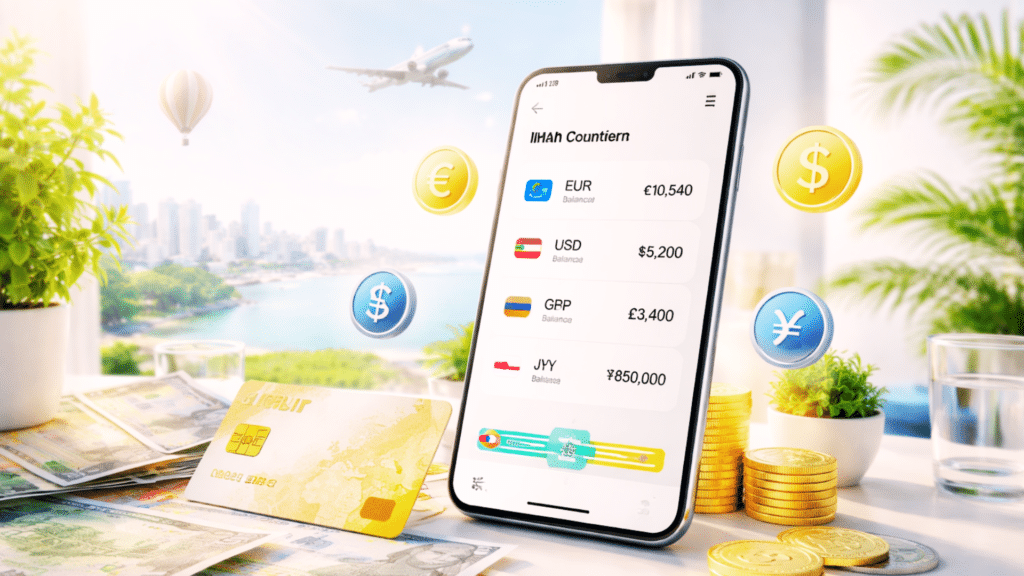
These accounts make it easy to move money between fiat and cryptocurrencies and can also be used for daily activities like paying bills or making big purchases. Bybit CEO Ben Zhou said, “to the bank, they’re simply doing a transfer to your own bank account,” showing how simple it is to combine banking with crypto services.
Which Partners Are Supporting Bybit Retail Banking?
Bybit retail banking is working with several licensed banking partners to make sure the service runs smoothly and follows regulations. These partners include Qatar National Bank (QNB), DMZ Finance, and Pave Bank, a startup lender licensed in Georgia. They help users make multi-currency transfers and handle fiat deposits.
Bybit also uses its network of nearly 2,000 bank partners and operates in over 200 jurisdictions, giving users reliable access to banking and financial services. The platform plans to follow local regulations, although some features still need regulatory approval before they can be fully available.
How Will Users Benefit from Bybit Retail Banking?
The primary benefit of Bybit retail banking is convenience and ease of use. With these accounts, users can hold fiat balances, convert their funds into cryptocurrencies, and carry out cross-border transactions using a personal IBAN. This setup removes the need to rely on third-party fiat on- and off-ramps, which often bring extra costs, delays, and added complexity.
Additionally, users will have the ability to deposit salaries, pay for everyday expenses, and manage their financial accounts in multiple currencies directly through the platform. Bybit retail banking combines the flexibility of digital assets with traditional banking systems while keeping a user-owned account model, allowing each individual full control over their funds and transactions.
How Does Bybit Retail Banking Fit Into the Company’s Strategy?
The launch of Bybit retail banking is part of a wider roadmap that goes beyond just individual accounts. The company is also planning institutional custody products, aimed at banks and large investors involved in tokenized real-world assets (RWA) such as property or stocks on blockchain platforms.
Bybit has confirmed that it will avoid prediction markets because of “a lot of compliance challenges,” while focusing on strengthening its presence in on-chain capital markets and RWA trading. CEO Ben Zhou described the accounts as a bridge between traditional finance and crypto infrastructure, showing how Bybit can serve both retail users and institutional clients.
The exchange has also signaled potential expansion into the US market under the pro-crypto stance of the Trump administration. Entering the US would require partnering with a licensed operator, but Bybit is reportedly exploring a US public listing and is in talks with major banks regarding the listing process. Zhou presented these strategic goals during a keynote titled “BUIDLing a New Financial Era,” giving context to Bybit’s plans for 2026.
How Has Bybit Recovered From Past Challenges?
Bybit’s move into retail banking comes after a challenging 2025, when the platform experienced a $1.5 billion hack linked to North Korean actors. About 515,000 tokens, mainly Ether and its derivatives, were stolen during the incident.
The company repurchased roughly $300 million worth of tokens to ensure zero losses for users, and operations continued without any downtime. Despite this setback, Bybit has expanded its global reach, now serving 82 million registered users worldwide. The exchange’s asset inflows rose from $1.3 billion in Q3 2025 to $2.88 billion in Q4 2025, showing a strong recovery in user confidence.
Based in Dubai, Bybit has also secured regulatory licenses, including a Virtual Asset Provider Organization license in the UAE and compliance with the Markets in Crypto-Assets (MiCA) Regulation in the European Economic Area through its Vienna-based entity.
What Are the Regulatory and Operational Considerations?
Launching Bybit retail banking involves navigating complex regulatory requirements. Every account must go through KYC verification, and cross-border transfers in multiple currencies need to follow international banking standards. Although Bybit already has banking partnerships to support the rollout, some regulatory approvals are still pending, and full access to all currencies will depend on local compliance rules.
Experts note that it is still an open question whether crypto-native companies can successfully enter traditional banking. Unlike fintech companies that first establish regulated banking and then add crypto, Bybit is doing the opposite. These regulatory and operational challenges highlight the need for caution as users begin to use integrated banking and crypto services.
How Does Bybit Retail Banking Compare With Industry Trends?
Bybit retail banking is rolling out as the crypto exchange space gets more crowded. Take Binance: they’ve filed for a MiCA license in Greece and picked up three licenses in Abu Dhabi for exchange, clearing, and broker-dealer work. They’re even thinking about restarting stock trading after dropping it four years back.
It’s all part of a bigger shift where crypto platforms are mixing in traditional finance services with digital assets. Bybit’s doing things differently, though sticking to a crypto-first model by layering banking services on top of what they already offer. Other players are taking it slow, but Bybit’s all about making life easier for users who want to switch between fiat and crypto without hassle.
What Users Should Know About Bybit Retail Banking?
Bybit retail banking provides a personal IBAN account, multi-currency transfers, instant fiat access, and integrated crypto trading. Users can handle daily banking tasks while keeping full control over their funds. The service also reinforces Bybit’s reliability after the 2025 hack, showing the company’s resilience and transparency in managing risks.

At the same time, regulatory approvals, compliance rules, and operational challenges remain important. Users should understand that while Bybit retail banking offers a combined financial experience, full access to all features across different currencies and regions will depend on licensing and local regulations.
Conclusion
Bybit retail banking represents a strategic operational expansion and offers personal IBAN accounts, instant fiat access, and seamless crypto trading within a single platform. Scheduled for February 2026, the launch aims to reduce friction between fiat and digital assets while providing convenience and integrated financial management.
The service benefits from Bybit’s global presence, partnerships with licensed banks, and regulatory compliance, including UAE and EEA licenses. At the same time, it faces challenges such as regulatory requirements, operational complexity, and competition from other exchanges. Overall, Bybit retail banking demonstrates a careful but ambitious strategy that combines traditional banking with crypto services while following legal and operational rules.
This move reflects the evolving landscape of financial services, where crypto companies increasingly merge with regulated banking to provide comprehensive user experiences. Bybit’s approach may set a benchmark for other exchanges exploring similar integrations, showing that crypto and traditional finance can operate together under structured and compliant frameworks.
Glossary
Bybit Retail Banking: Lets users open personal IBAN accounts with multiple currencies.
Personal IBAN: A number to send and receive money internationally.
Multi-Currency Account: Holds and transfers money in different currencies.
Tokenized Assets: Real-world items like property or stocks on the blockchain.
KYC: A process to verify a user’s identity for a bank account.
Frequently Asked Questions About Bybit Retail Banking
When will Bybit retail banking launch?
Bybit retail banking is planned to launch in February 2026, but some features need regulatory approval.
What features will Bybit retail banking offer?
It will offer personal IBAN accounts, multi-currency transfers, fiat deposits, bill payments, salaries, and crypto trading.
How many currencies will it support?
Bybit retail banking will support transfers in up to 18 currencies, starting with US dollars at launch.
Which banks are partnering with Bybit?
Bybit is working with Qatar National Bank, DMZ Finance, and Pave Bank to support its retail banking services.
Who can use Bybit retail banking?
Anyone who completes KYC verification on Bybit can access their personal banking account and its features.