

The BNB Chain upgrade has triggered urgency across the crypto space as the network prepares for a decisive shift. This is not a routine update. It is a critical step that will define how smoothly the blockchain operates in the coming months.
According to the source, node operators must install BSC v1.7.2 before the BNB hard fork scheduled for April 28 at exactly 2:30 a.m. UTC. The message is clear and direct. There is no room for delay or partial compliance.
Why the BNB Chain Upgrade Is Not Optional
The BNB Chain upgrade carries a strict warning that cannot be ignored. Developers stressed that outdated configurations and poor binary replacement can cause nodes to lose sync. Once that happens, the node stops functioning properly within the network.
As explained in a , synchronization ensures that every node shares the same version of truth. Without it, transaction validation breaks down. This makes the BNB hard fork a mandatory event, not a suggestion.
Nodes that fail to upgrade risk falling off the network entirely. That is not a minor glitch. It means losing participation in consensus and missing transactions.
BNB Chain Upgrade Introduces Strict Gas Rules
The BNB Chain upgrade introduces BEP-652, which sets a firm gas cap of 16,777,216 per transaction. This may sound technical, but the impact is simple. Every node will now reject transactions that exceed this limit.
Unlike the previous soft cap system, this rule applies equally across the network. The BNB hard fork ensures that no node interprets limits differently. This uniform enforcement improves consistency and removes uncertainty.
Developers have described this change as a step toward stronger reliability. It creates a level playing field for all participants in the system.
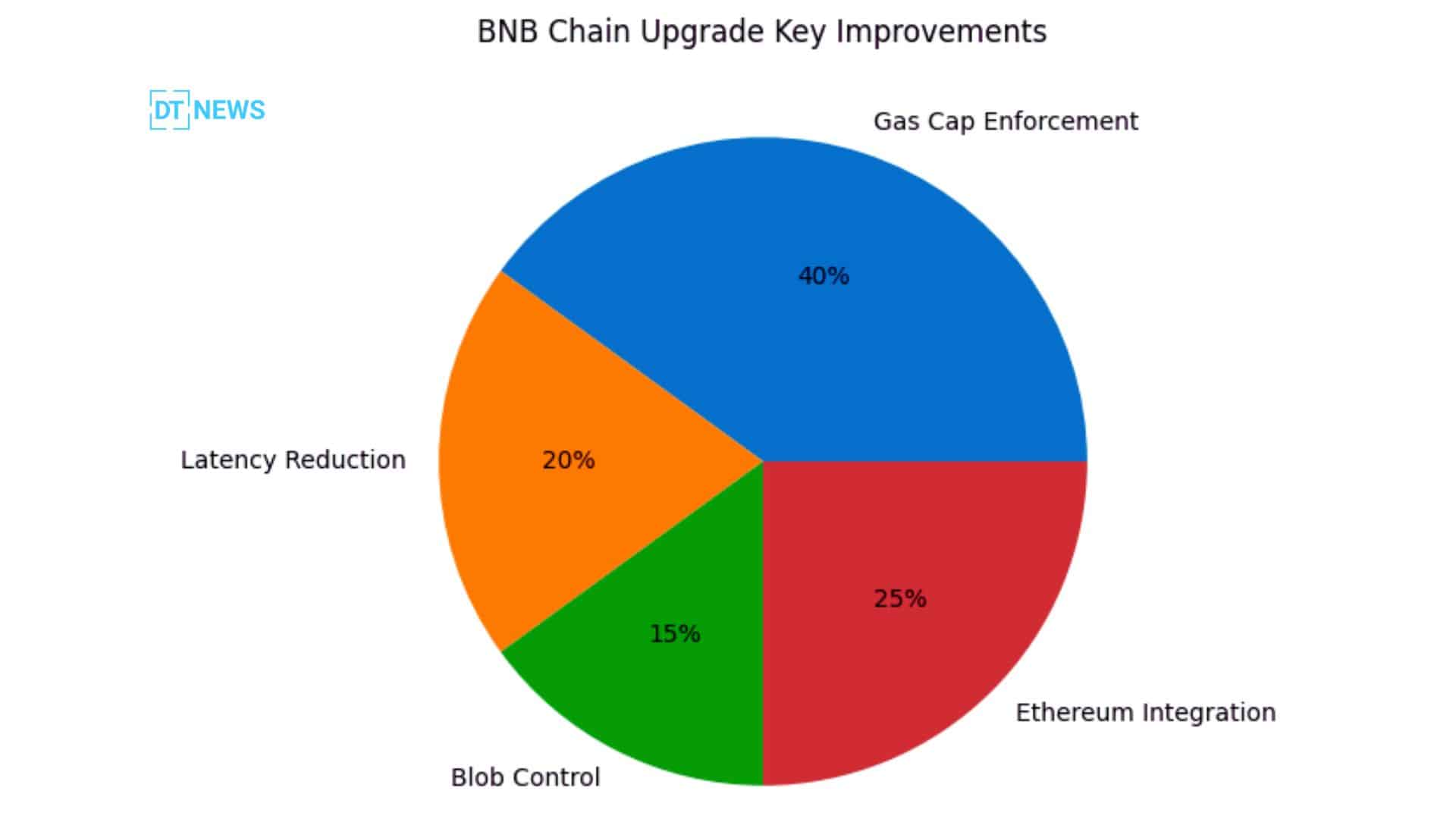
Proposal Breakdown Shows Deeper Structural Shift
The BNB Chain upgrade is not limited to one or two changes. It includes a total of nine BEPs, showing a broad transformation of the protocol.
Out of these, seven Ethereum-linked proposals were adopted from the Fusaka framework. Six required a hard fork, while one involved a client-side RPC adjustment. At the same time, six proposals were rejected due to architectural differences.
The BNB hard fork also introduces two native updates. BEP-657 controls when blob transactions can enter blocks, while BEP-648 reduces latency and improves finality. Together, these changes signal a deeper shift in how the network handles scale and speed.
From Testnet Success to Mainnet Pressure
The BNB Chain upgrade already proved its potential during the testnet phase on March 24 at block 88,379,325. Developers reported better block construction, improved execution accuracy, and stronger performance under heavy load.
A confirmed that transaction handling improved at scale. However, testnet success does not guarantee smooth execution on mainnet. The BNB hard fork now depends on infrastructure readiness. Validators and node operators must ensure systems are updated correctly. This phase often exposes weak setups that testing cannot fully reveal.

Conclusion
The BNB Chain upgrade highlights a simple but powerful truth. Blockchain strength depends not only on code but also on coordination. As the BNB hard fork approaches, the focus shifts to discipline and preparation.
This upgrade reflects a growing trend in crypto networks. Precision matters more than speed. For developers, analysts, and investors, this moment offers a clear lesson. Strong systems are built through careful upgrades, strict rules, and collective responsibility.
Glossary of Key Terms
Hard Fork: A major update that changes blockchain rules and requires all nodes to upgrade.
Node: A system that validates and records transactions on the blockchain.
Gas Limit: The maximum computational effort allowed for a transaction.
Finality: The stage when a transaction becomes permanent and irreversible.
Testnet: A testing environment used before deploying updates on the main network.
FAQs About BNB Chain Upgrade
What is the BNB Chain upgrade?
It is a mandatory update that prepares the network for improved stability and performance.
Why is the BNB hard fork important?
It introduces uniform rules that ensure consistency and efficiency across all nodes.
What happens if nodes are not updated?
They may lose sync and stop participating in the network.
When will the upgrade happen?
It is scheduled for April 28, 2026, at 2:30 a.m. UTC.