

This article was first published on Deythere.
- Crypto Payments as Common Checkout Options
- Ease of Integration Remains the Primary Obstacle
- Generational Demand and Industry Patterns
- Future Outlook and Merchant Expectations
- Comparison of Crypto Payments and Traditional Systems
- Conclusion
- Glossary
- Frequently Asked Questions About Crypto Payments Adoption
- How many U.S. merchants are currently accepting cryptocurrency payments?
- Why are merchants more interested in crypto payments?
- Would businesses adopt crypto more if adoption were easier?
- Are merchants looking at crypto as a long-term payment solution?
- Which sectors are at the forefront of crypto payments adoption?
A new survey report by PayPal and the National Cryptocurrency Association (NCA) has shown that acceptance of crypto payments among U.S. merchants is increasing faster and faster.
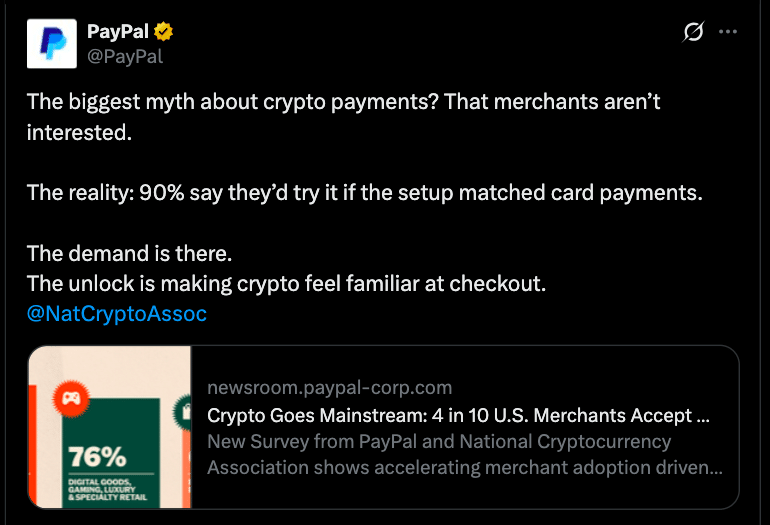
The study says that almost four in ten retailers already accept crypto at checkout, while nine in 10 would begin using crypto if the process was as easy as taking card payments.
Crypto Payments as Common Checkout Options
The PayPal-NCA report found that almost 40% of U.S. merchants now allow customers to make purchases with cryptocurrency. This percentage jumps to about half for large businesses with annual revenue of more than $500 million.
Merchants across various sectors are heeding the call of their customers. The survey says 88 percent of businesses receive inquiries from shoppers about paying in crypto, with 69 percent saying customers want to pay in crypto at least monthly.
The difference between this survey and earlier reports, is that the focus here isn’t just interest but an emphasis on real transactions and merchant experience.
Merchants who accept crypto say it now represents a meaningful portion of their sales.
Ease of Integration Remains the Primary Obstacle
One of the takeaways from the study is that the biggest barrier to more widespread choice in crypto payment is complexity. Without a doubt, many merchants are willing to accept or already do accept crypto; 90% answered they would process crypto payments like any other form of payment if it didn’t feel different and was just as easy as accepting credit cards.
Focusing on this point, the general manager and vice president of crypto at PayPal, May Zabaneh, has said that companies that begin accepting digital currencies will see real value when they do, while maintaining that the key to wider acceptance is making paying with crypto feel as easy as it does when paying for something in the old-fashioned way.
Independent business owners expressed a desire for payment systems that reflect their existing checkout flows, where adding digital assets doesn’t create disruptions or demand high levels of technical know-how.
Generational Demand and Industry Patterns
The report notes that the younger consumer demographics are leading adopters of crypto payments. Merchants report seeing especially strong interest from Millennials and Gen Zs.
Industry differences are also visible. The hospitality and travel industry, as well as digital goods, gaming and luxury retail all have higher rates of adoption when it comes to crypto payments, because of tech-savvy consumers seeking to make cross-border purchases.
Retailers and E-commerce is not far behind but still at lower rates
Future Outlook and Merchant Expectations
Looking forward, 84% of surveyed merchants think crypto payments will be commonly accepted in five years. Stu Alderoty, the president of the National Cryptocurrency Association, said that interest is not really the issue; understanding is.
He said, “Too many people still don’t see how crypto fits into their everyday lives. That’s why partnerships with trusted platforms like PayPal are so important.”
The survey shows that once the process of making a purchase with crypto is as easy as paying with cards, many more merchants, even an estimated nine in ten would accept digital money at checkout.
Comparison of Crypto Payments and Traditional Systems
The survey also tells of the attitudes that people have about crypto payments vs. traditional systems. Merchants note that advantages like quicker transaction times, greater privacy and the possibility of winning over customers who have a digital asset preference. While these are factors in the adoption discussion today, what it all really boils down to is ease of implementation.
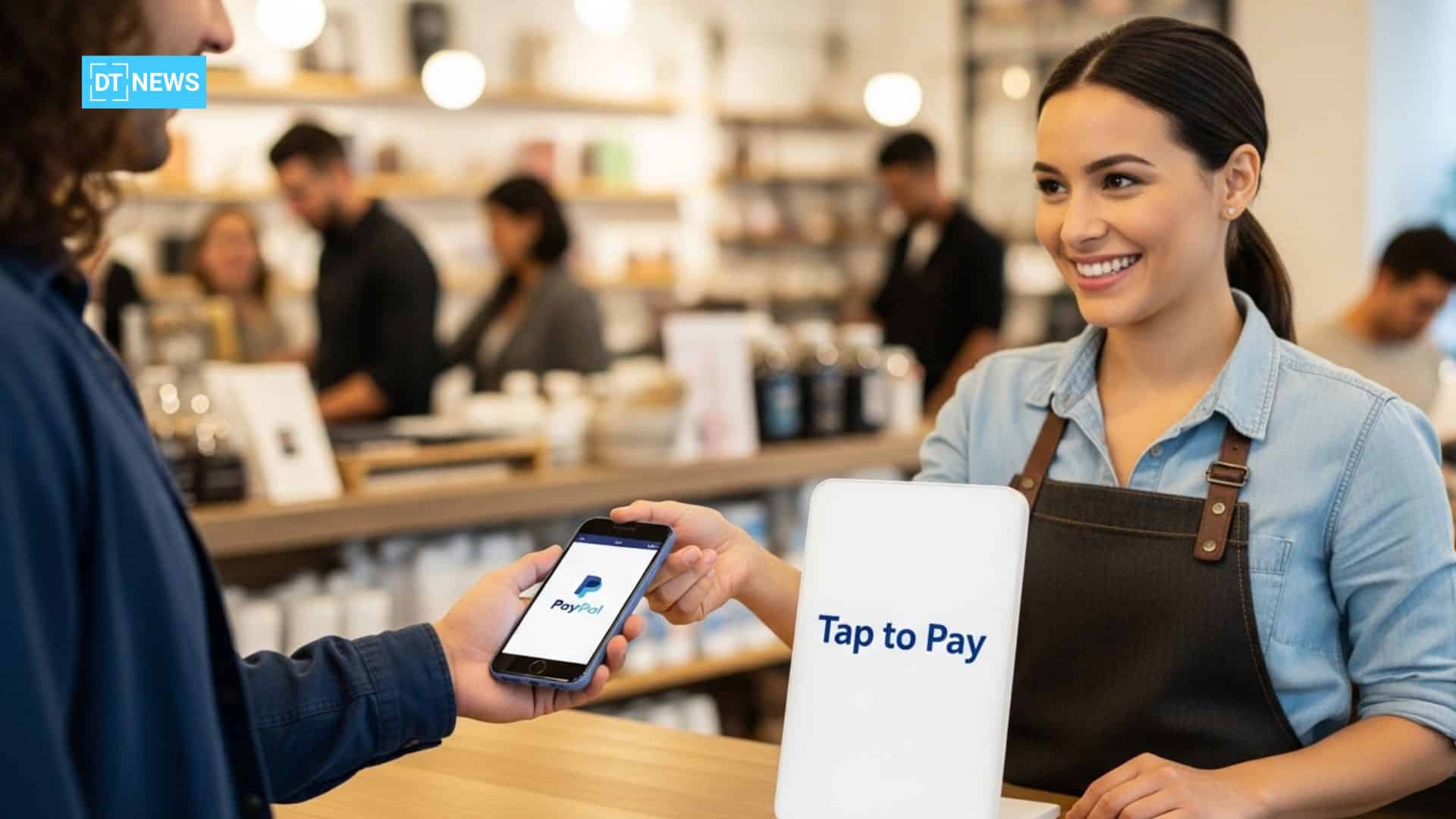
PayPal has been innovating to facilitate a bigger crypto integration itself. Services such as “Pay with Crypto” enabling merchants to receive digital currencies and convert them into stablecoins or fiat, are working toward breaking the barriers to entry by easing settlement and cutting costs for businesses.
Conclusion
New data indicates that early adopters are no longer the only ones living on crypto. Almost 40% of U.S. merchants now accept digital currency out of a sense of observable customer demand and to be able to appeal to shoppers regardless of their ages.
The acceptance curve is being driven by large companies, but smaller firms are catching up fast as young consumers clamour for more modern ways to pay.
Merchants unanimously agree that the key to near-universal adoption is making crypto payments as simple and natural as card systems.
If payment processors are able to replicate that level of simplicity, the market could see a rapid switch toward crypto acceptance at the point of sale in the nearest future.
Glossary
Checkout integration: what allows for digital payment methods to be integrated into a retailer’s point-of-sale systems and transmitted, which ultimately changes how easily it is for consumers to pay with various forms.
Stablecoins are cryptocurrencies meant to keep a stable value and are typically tied to fiat like the U.S. dollar in order to guard against volatility when conducting transactions.
Point of Sale: the time and place where a retail transaction takes place: in a store or online, at checkout.
Generational demand: considering the preference and behavior factors that impact the markets by different age groups, particularly those of Millennials and Gen Zs who exhibit high interest in digital payment as a means of payment.
Frequently Asked Questions About Crypto Payments Adoption
How many U.S. merchants are currently accepting cryptocurrency payments?
About 40% of U.S. merchants now accept crypto at checkout, with more adoption among larger enterprises.
Why are merchants more interested in crypto payments?
Much of the merchant interest is fueled by customer demand, particularly from younger shoppers who are looking for increasingly flexible and modern payment options.
Would businesses adopt crypto more if adoption were easier?
Yes. Ninety percent of merchants would attempt to accept crypto if the process were like using a regular credit card, the survey found.
Are merchants looking at crypto as a long-term payment solution?
Roughly 84% think crypto payments will go mainstream in the next five years.
Which sectors are at the forefront of crypto payments adoption?
Sectors with the greatest acceptance of payments in crypto include hospitality, travel, virtual digital products, gaming and luxury retail.
References