
























This article was first published on Deythere.
- How Did the Bitcoin Scam Operation Begin?
- Why Did Evan Tangeman Plead Guilty in the Bitcoin Scam Case?
- How Did the Group Pull Off the 4,100 Bitcoin Theft?
- What Role Did Extravagant Spending Play in Uncovering the Scam?
- How Did Tangeman Attempt to Obstruct the FBI?
- What New Arrests Have Been Made in the Expanding Case?
- Why Are Prosecutors Using RICO in a Crypto Case?
- Conclusion
- Glossary
- Frequently Asked Questions About Bitcoin Scam
The latest Bitcoin scam investigation has uncovered a well-organized online trick that stole more than 4,100 Bitcoin from investors across the United States and powered a $263 million crime operation built on lies, luxury spending, and digital deception.
The U.S. Justice Department’s wide-ranging case now spans several states and even other countries, showing how casual online friendships were transformed into one of the most complex crypto crime rings in recent years.
How Did the Bitcoin Scam Operation Begin?
The operation began inside a group later identified as the SE Enterprise. Members first connected through online gaming platforms before the group shifted into a social engineering setup. Fake cybersecurity warnings were used to convince crypto holders to give up access to their digital wallets.
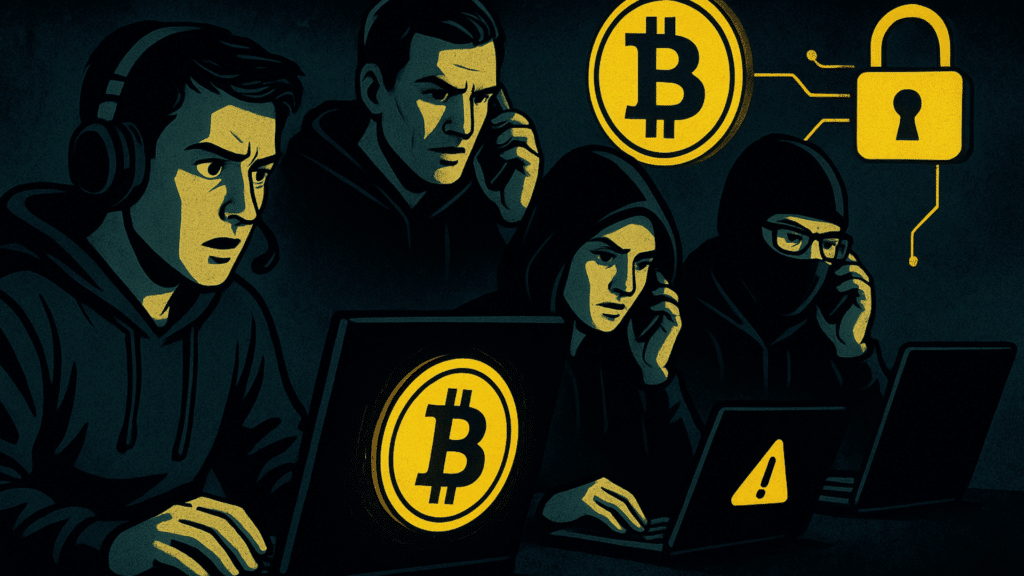
Investigators say the scheme started no later than October 2023 and continued until May 2025. What began as casual online friendships slowly grew into a well-organized criminal network operating across multiple locations.
The callers acted like support staff. Victims were told their accounts were under threat. Trust was used against them. Crypto was taken. The Bitcoin scam grew quickly, mostly without drawing attention in its early stages.
Why Did Evan Tangeman Plead Guilty in the Bitcoin Scam Case?
Evan Tangeman, a 22-year-old from Newport Beach, California, became the ninth person to admit guilt in the case on Tuesday. He appeared in front of U.S. District Court Judge Colleen Kollar-Kotelly and confessed to taking part in a RICO conspiracy.
Tangeman admitted that he helped wash more than $3.5 million in stolen cryptocurrency. His job mainly involved converting crypto into cash and arranging luxury rental homes using fake names.
He is now scheduled to be sentenced on April 24, 2026. Prosecutors say his guilty plea adds strong support to the government’s case against the larger Bitcoin scam network.
How Did the Group Pull Off the 4,100 Bitcoin Theft?
The group used stolen data taken from hacked websites and servers to track down wealthy crypto investors. After picking their targets, callers posing as cybersecurity staff reached out to the victims.
One of the biggest attacks happened on August 18, 2024. A victim in Washington, D.C., was misled into handing over access to their crypto assets. In just that one attack, the group stole more than 4,100 Bitcoin.
At that time, the stolen Bitcoin was worth around $263 million. Prosecutors now say its value has crossed $370 million. That single theft became a turning point in the wider Bitcoin scam investigation.
What Role Did Extravagant Spending Play in Uncovering the Scam?
The money moved fast, and so did the spending. Prosecutors say members of the group were dropping up to $500,000 in a single night at elite nightclubs. Luxury handbags worth tens of thousands of dollars were freely passed around at parties.
Expensive watches, priced between $100,000 and $500,000, became part of their everyday lifestyle. Private jets were used for travel.
Armed security was hired for protection. The group rented high-end mansions in Los Angeles, the Hamptons, and Miami, living across some of the most expensive neighborhoods in the country.
Their movements were loud. Their lifestyle was impossible to miss. Federal investigators later tied at least 28 exotic cars to the group, including one valued at $3.8 million. Officials say this unchecked spending helped law enforcement understand the true size and reach of the Bitcoin scam.
How Did Tangeman Attempt to Obstruct the FBI?
After co-conspirator Malone Lam was arrested in Miami on September 18, 2024, Tangeman is accused of trying to protect the rest of the group from law enforcement.
Court records show he accessed Lam’s home security system and viewed images of FBI agents searching the residence. Investigators say he later told another member of the group to collect and destroy digital devices from a Los Angeles location linked to the operation.
Prosecutors argue these steps were meant to interfere with the investigation and show clear intent to obstruct justice within the wider Bitcoin scam conspiracy.
What New Arrests Have Been Made in the Expanding Case?
After Tangeman entered his guilty plea, the court moved forward by unsealing a second superseding indictment that added three more defendants to the case.
The new defendants are Nicholas Dellecave, also known as Nic and Souja, Mustafa Ibrahim, known as Krust, and Danish Zulfiqar, who also goes by Danny and Meech. Dellecave was arrested in Miami on December 3, 2025. Ibrahim and Zulfiqar were arrested in Dubai.
Authorities allege that all three played leadership roles within the criminal network. Their arrests are seen as another important step in breaking apart the wider Bitcoin scam operation.
The investigation is being led by the U.S. Attorney’s Office for the District of Columbia, the FBI’s Washington Field Office, and IRS-Criminal Investigation, with support from multiple federal agencies across the country.
Why Are Prosecutors Using RICO in a Crypto Case?
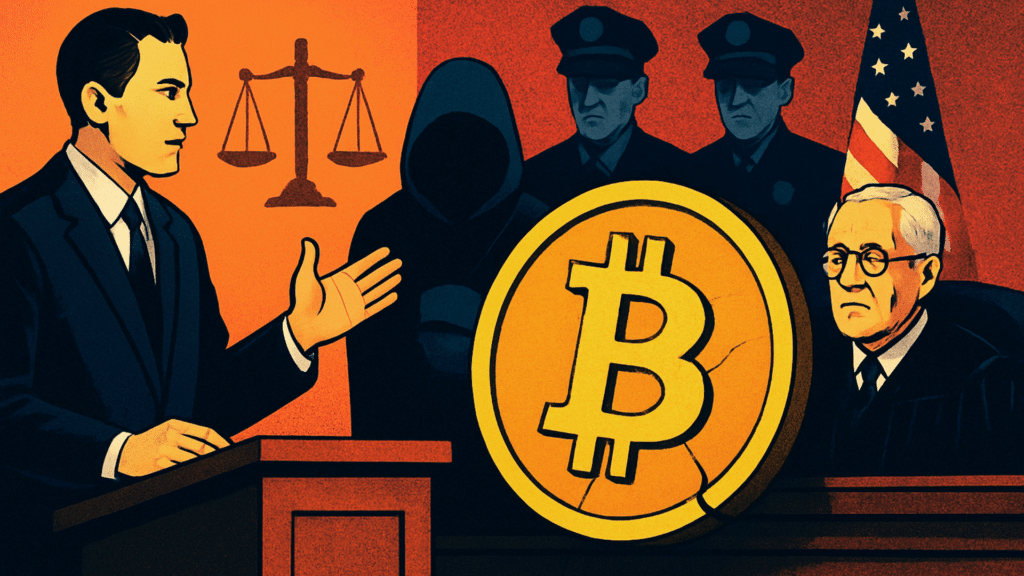
Prosecutors are using RICO laws, which were once mainly used against mafia groups and drug cartels, to charge the entire group as one organized criminal operation.
Ari Redbord, Global Head of Policy at TRM Labs, explained that crypto crimes move extremely fast, allowing stolen funds to travel across the internet within seconds. At the same time, the involvement of threats or violence creates real and immediate danger for victims.
He also noted that when cybercrime is mixed with real-world intimidation, it creates a hybrid threat that law enforcement now has to deal with more directly.
By using RICO charges, prosecutors want to make it clear that the Bitcoin scam was not just a series of separate hacks, but one coordinated and well-organized criminal network.
Conclusion
The $263 million Bitcoin scam now stands as one of the largest social engineering crypto prosecutions in U.S. history. With nine guilty pleas, multiple new arrests, and international cooperation underway, the DOJ says the case reflects a broader shift in how digital financial crimes are being investigated and prosecuted.
For investors, the message is clear. Trust can be misused. Online relationships carry real-world risks. As this case shows, gaming chats and fake support calls can grow into a criminal empire worth hundreds of millions of dollars.
As Tangeman awaits sentencing and more defendants head toward trial, federal authorities continue to expand the investigation, signaling that the full scope of this Bitcoin scam may still be unfolding.
Glossary
DOJ : The U.S. agency that investigates and prosecutes major crimes.
SE Enterprise: A criminal group accused of stealing Bitcoin and laundering money.
Laundering: The act of hiding stolen money to make it appear legal.
RICO Conspiracy: A serious law used to charge organized crime groups working together.
FBI: A U.S. agency that investigates major crimes, including cybercrime.
Frequently Asked Questions About Bitcoin Scam
Who exposed the Bitcoin scam?
The U.S. Department of Justice exposed the Bitcoin scam after a long investigation.
How did the scammers steal the Bitcoin?
The scammers stole the Bitcoin by pretending to be security staff and tricking victims into giving access to their wallets.
What did Evan Tangeman do in the scam?
Evan Tangeman helped the group by turning stolen crypto into cash and renting luxury homes using fake names.
What punishment could Tangeman face?
Tangeman will be sentenced on April 24, 2026, and he may receive a long prison sentence.
How much Bitcoin was stolen in one major attack?
The group stole more than 4,100 Bitcoin from one victim in Washington, D.C.
Which countries were connected to the scam network?
The scam network operated across several U.S. states and also reached into other countries.